What Is a 100A to 200A Service Upgrade?
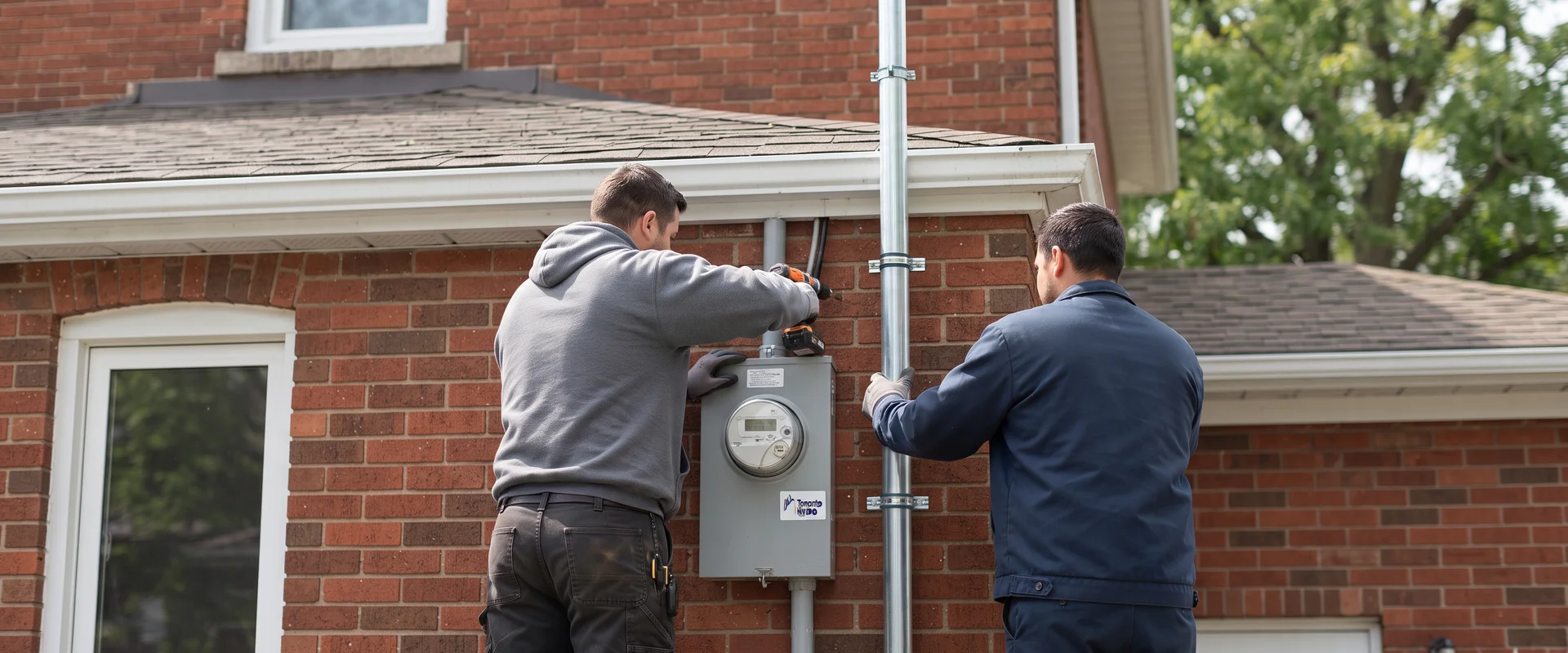
A 100A to 200A service upgrade replaces the main breaker, the load centre, the meter base and the service entrance conductors so the property can draw twice the continuous current it could before. It is not a panel swap. The whole service from the Toronto Hydro service drop or underground lateral, through the weatherhead and meter base, down to the main breaker, is rebuilt to carry 200A.
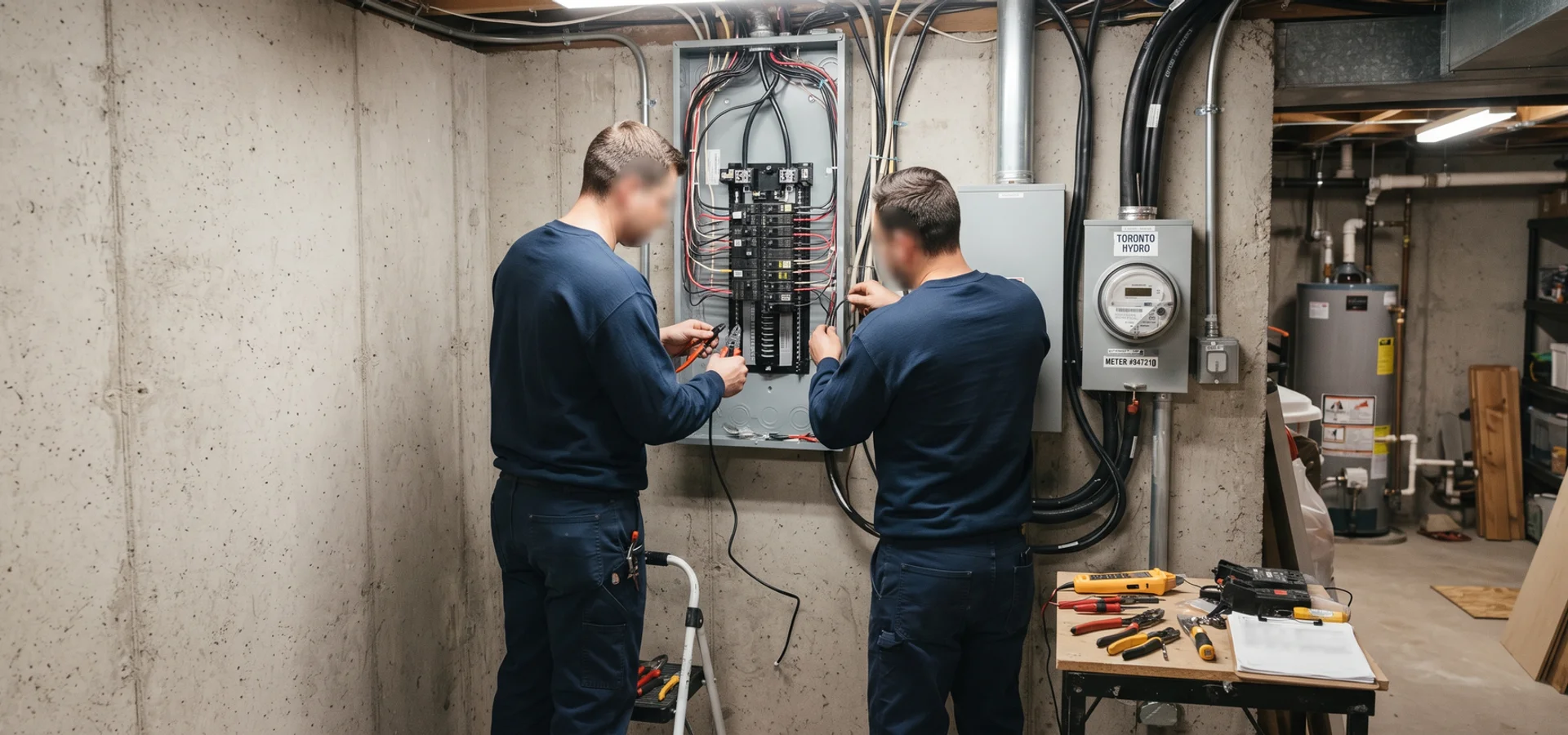
For a Toronto home that means moving from a panel with every position filled to a 42-circuit load centre on a copper bus bar, with real spare capacity left after the existing circuits transfer across. The 2/0 AWG copper service entrance conductors and the new meter base are sized to the upgraded service, and the grounding electrode conductor is verified rather than assumed.
The trigger is almost always electrification. A Level 2 EV charger draws 40A or 50A continuous, and the Ontario Electrical Safety Code treats it as a continuous load at 80%, so it eats capacity fast. Add a cold-climate heat pump, an induction range and a basement-suite subpanel, and an OESC Section 8 demand calculation on a 100A service runs out of room before the renovation is finished.
Because the meter has to come off, this is coordinated work rather than a same-hour job. We file the ESA Notification of Work, submit the service layout to Toronto Hydro, book the disconnect, complete the install, pass the inspection and hand back the Certificate of Inspection. For the rest of the residential range, see residential electrical panel upgrades.
Types of 100A to 200A Upgrade
- Overhead mast, panel in place. The service drop lands on a new mast and weatherhead, the meter base is replaced, and the new 200A load centre goes in the same position as the old one. The cleanest version of this job.
- Overhead with panel relocation. The existing panel sits in a closet or under a stair with no working-space clearance, so the new load centre moves to a compliant wall and the feeder is rerouted.
- Underground lateral. Common on rebuilt streets in Mimico, Guildwood and parts of North York. The lateral, meter base and load centre are all replaced, and any trenching or conduit work is priced separately in the quote.
- 200A service with a suite subpanel. The service upgrade and a 60A or 100A subpanel on a four-wire feeder are installed together, which is cheaper than doing them as two projects.
When Do You Need to Go From 100A to 200A?
- Level 2 EV charging. A 40A or 50A continuous load on top of laundry, HVAC and refrigeration is where most 100A services fail the calculation. Where the panel is otherwise healthy, an EV charger electrical upgrade with an EVEMS device is the alternative worth pricing.
- Heat pump conversion. Moving off gas heating adds a large dedicated load plus backup heat, and the calculation has to hold on the coldest design day, not the average one.
- Induction range plus electric water heating. Two large resistive loads that arrive together in most kitchen renovations.
- Basement suite or accessory dwelling unit. The City of Toronto expects a documented load calculation, a dedicated subpanel and a separate disconnect. See basement suite electrical upgrades.
- No spare breaker positions. Tandems in every slot and no knockouts left means the enclosure, not the breaker count, is the limit.
- Failing panel hardware. Bus-bar corrosion, double-tapped terminals or a warm enclosure means the panel needs replacing anyway, so the incremental cost of upgrading the service at the same time is small. That path is covered under electrical panel replacement.
What Drives the Cost Between $2,500 and $8,000
Four variables move a quote inside the band. Service type is the biggest: an underground lateral with trenching costs materially more than a mast and weatherhead replacement. Conductor routing is second, because the distance from the meter base to the panel position sets the length of 2/0 AWG copper and any conduit needed. Panel choice between Siemens, Square D / Schneider Electric and Eaton shifts material cost. Scope added by the calculation is the fourth: a grounding electrode conductor that has to be run to the water service, a panel relocation for working-space clearance, or a subpanel the suite plan requires.
What does not move is the ESA permit fee, which is included, and the Toronto Hydro coordination fee, which is itemised on its own line so you can see it. Where we find something after the service is opened that changes the scope, work stops and you get a revised written quote before we continue.
What to Expect on Install Day
Toronto Hydro arrives in the morning to pull the meter and drop the service. From that point the property is without power. We remove the old load centre, replace the mast or lateral and the meter base, pull the new service entrance conductors, and mount the 200A load centre. Existing circuits move across onto correctly sized breakers, arc-fault and ground-fault protection goes on the circuits that require it, terminations are torqued to specification, and the panel schedule is written and fixed inside the door.
The ESA inspector attends to review bonding, grounding, terminations and labelling. Once the Certificate of Inspection is signed, Toronto Hydro reconnects and sets the meter. On a standard overhead job, power is back the same afternoon. Before we leave, you get the certificate, the panel schedule and the itemised invoice that matches the original quote.