What Does a Hot Tub Need Electrically?
A hot tub needs a dedicated 240V circuit sized to its nameplate current, ground-fault protection, a disconnect placed within reach but outside the prohibited distance from the water, and equipment bonding around the tub and pad. Most residential tubs in Toronto land on a 40A or 50A circuit, though the nameplate is the only thing that decides it, because heater and pump ratings vary between models.
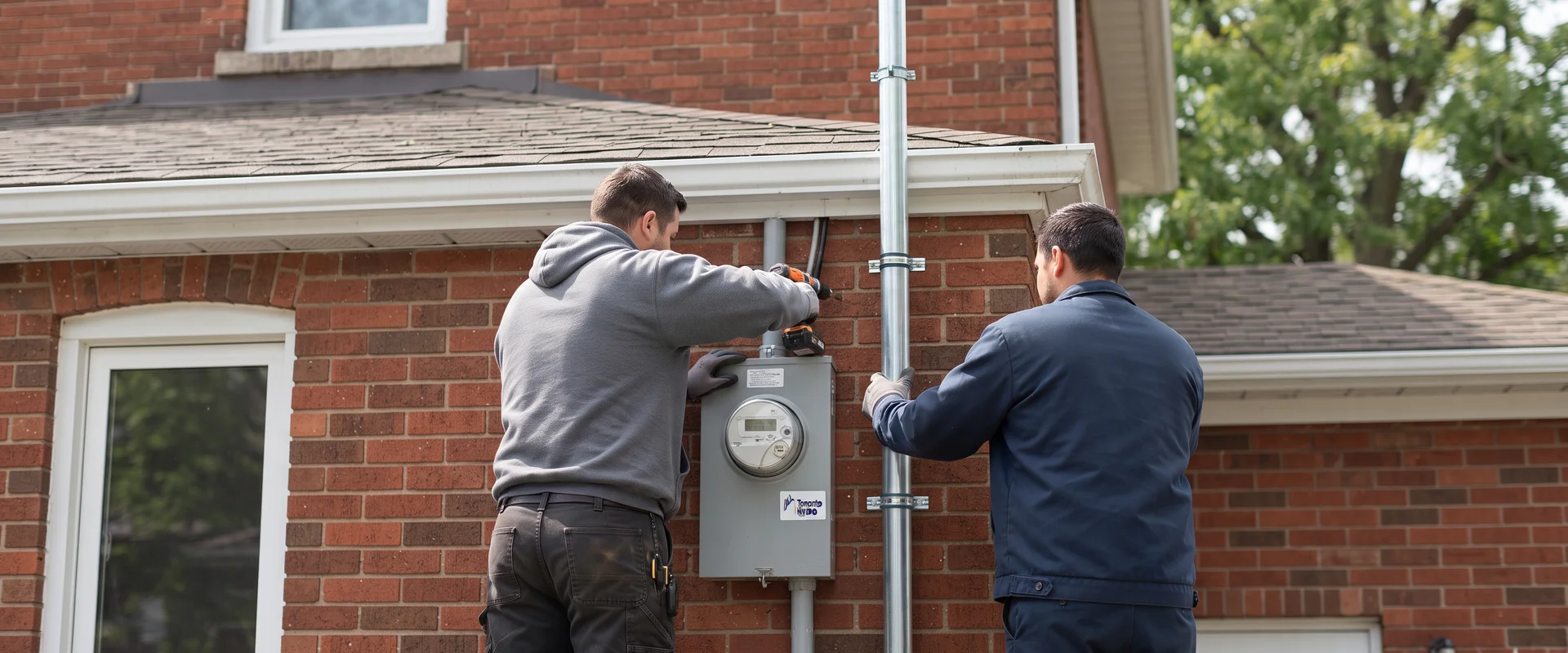
Two things make this more than a simple circuit run. The first is capacity: a tub heater is a large load, and on a tight 100A service the OESC Section 8 demand calculation needs checking before anything is ordered. The second is the outdoor environment: the disconnect enclosure, the conduit and the fittings all have to be rated for exposure, and the foundation penetration has to be sealed properly.
Where the main panel has no free positions, an outdoor-rated subpanel near the tub is usually cheaper than a full service upgrade for one appliance. Where a service upgrade is already planned for other reasons, the tub circuit is incremental work while the panel is open.
For the wider residential range, see residential electrical panel upgrades.
Installation Types
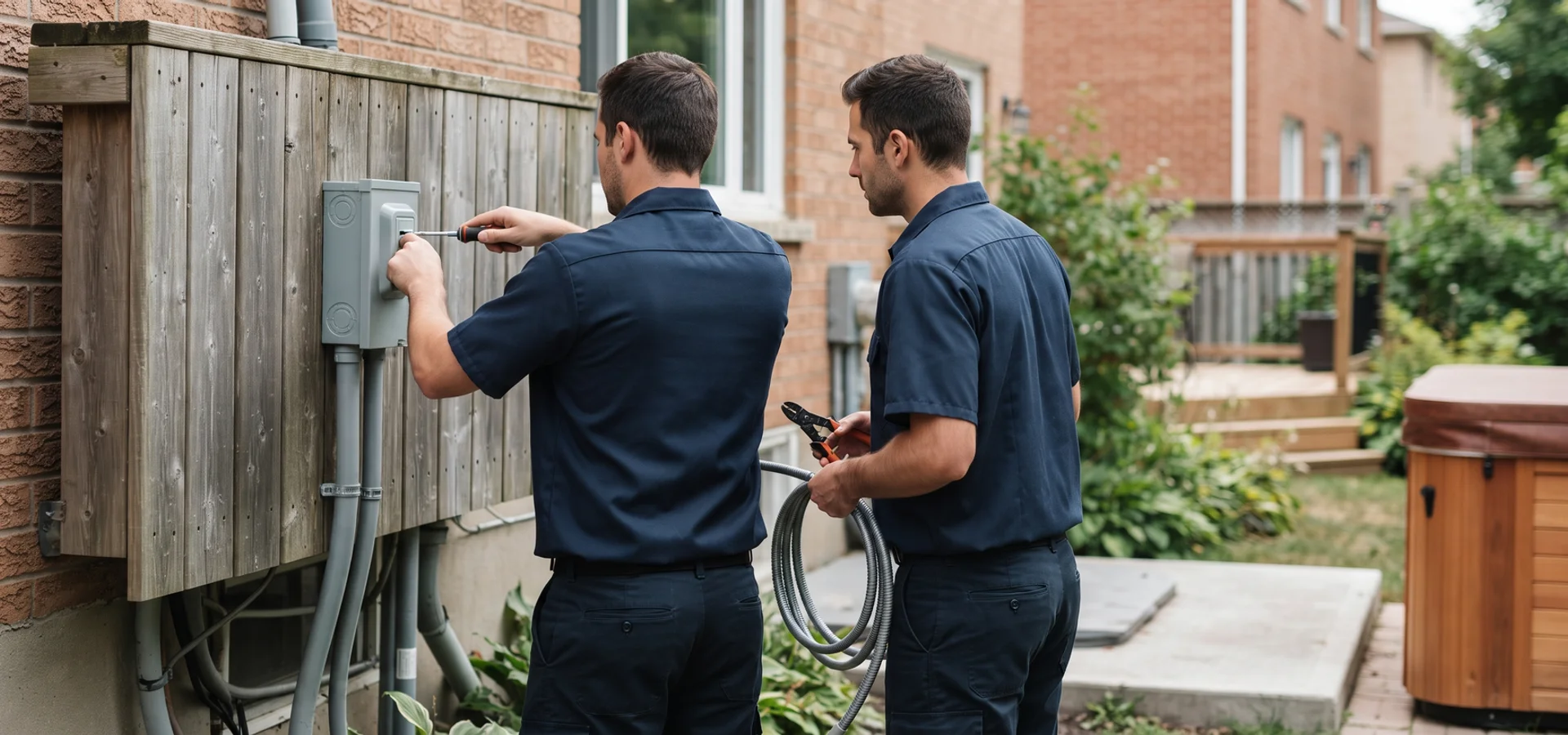
- Dedicated circuit with exterior GFCI disconnect. The standard job: conduit from the panel, through the foundation, to a weatherproof disconnect near the pad.
- Long feeder with voltage-drop sizing. Where the tub is at the back of a deep lot, conductor size goes up to keep voltage drop inside limits.
- Outdoor-rated subpanel. A small enclosure near the tub fed by one feeder, which also leaves capacity for pond pumps, landscape lighting or a future shed.
- Combined with a service upgrade. The tub circuit installed alongside a 200A service change as one project.
When Panel Work Is Needed First
- The panel is full. No free positions means either an outdoor subpanel or a panel replacement.
- You are on a 60A service. A tub is not viable. That is a service upgrade conversation. See 60A to 100A service upgrades.
- A charger is also going in. A tub plus a Level 2 charger on a 100A service is normally where the calculation fails. See EV charger electrical upgrades.
- The existing tub circuit was never permitted. Undersized conductors, a missing disconnect or no bonding all need correcting, and the correction gets permitted and inspected.
- The panel is at end of life. Adding a 240V load to a corroded or obsolete panel is not worth doing. See electrical panel replacement.
What Drives the Cost Between $800 and $3,000
Distance is the main driver, because it sets conductor size, conduit length and whether trenching is involved. Route difficulty is second: a straight run through a joist bay and out through the foundation is quick, while a finished basement ceiling or a long exterior run is not. Panel capacity decides whether a subpanel enters the scope. Tub rating is the fourth, as a higher heater and pump load means heavier conductors and a larger breaker.
The ESA permit fee is included in the quote. Bonding and the disconnect are part of the base scope, not extras, because the installation cannot pass inspection without them.
What to Expect on Install Day
We confirm the nameplate data, set the correctly sized dual-pole breaker or subpanel feeder, and run the conduit. Penetrations through the foundation are sealed. The outdoor-rated GFCI disconnect is mounted at the code-required distance from the water and within reach of someone standing at the tub.
Equipment bonding is connected to the pad reinforcement and any nearby metal structures. Conductors are terminated and torqued, the panel schedule is updated, and the circuit is tested.
The ESA inspector reviews the circuit, disconnect placement and bonding. Once the Certificate of Inspection is issued, the tub is energized and we verify the GFCI trips and resets correctly under load before leaving.