What Is Electrical Panel Replacement?
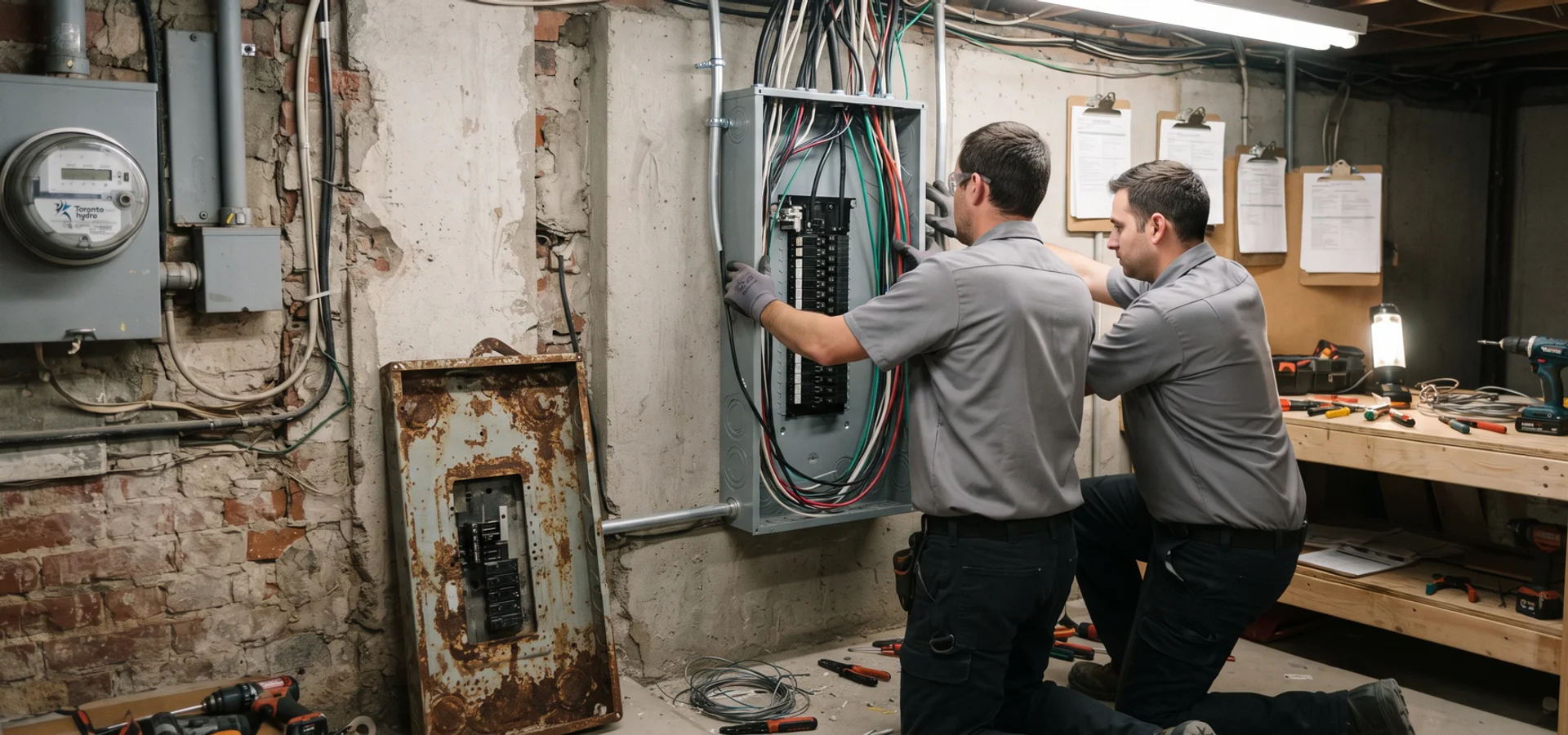
Panel replacement swaps a failing, corroded or obsolete load centre for a new breaker panel at the same service size. The amperage does not change, so the meter base and service entrance conductors usually stay, and in many cases the utility never has to attend. What changes is the condition of everything inside the enclosure: the bus bar, the terminations, the breakers and the labelling.
This is the right job when the problem is the panel rather than the capacity. Bus-bar corrosion in a damp Toronto basement, double-tapped terminals from decades of added circuits, an enclosure rusting from the bottom up, breakers that are no longer manufactured for that panel, or simply no positions left that are not already tandemmed.
It is the wrong job when the OESC Section 8 demand calculation says your loads exceed the existing service. In that case the honest answer is a service upgrade, because a new panel on an undersized service does not solve a capacity problem. We run the calculation first and tell you which applies. If it points to more capacity, see 100A to 200A service upgrades.
For the rest of the residential range, see residential electrical panel upgrades.
Types of Panel Replacement
- Straight replacement in position. Same amperage, same wall, new load centre. The cleanest and cheapest version.
- Replacement with relocation. The existing panel sits in a closet, a bathroom or under a stair without the working space the Ontario Electrical Safety Code requires, so the new one moves to a compliant position.
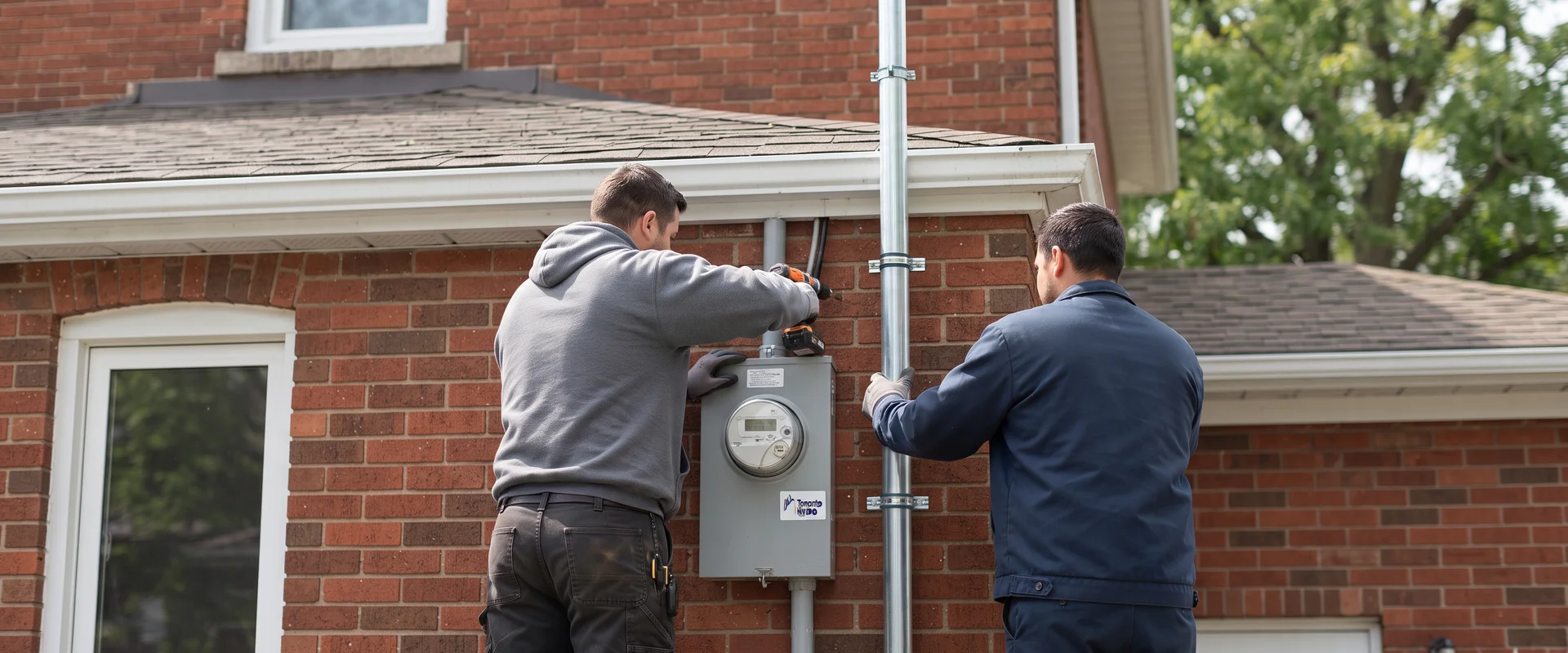
- Replacement with meter base. The panel is failing and the meter base is corroded, so both get done together. This one needs a utility disconnect.
- Split-bus replacement. Older panels with no single main breaker, protected instead by several 60A pull-outs. These get replaced with a single-main load centre.
When a Panel Needs Replacing
- Breakers trip with no clear cause. Repeated tripping on a circuit with normal load points at a worn breaker or a poor bus connection.
- The enclosure is warm. Heat at the panel means resistance at a termination or the bus. This is a call-now symptom, not a wait-and-see one.
- Rust or water staining inside. Common in Toronto basements. Corrosion at the bus is not repairable.
- Every position is tandemmed. No knockouts and no free positions means the enclosure is the constraint.
- Double-tapped terminals. Two conductors under a single-conductor terminal, which is both a heat risk and a routine ESA flag.
- Obsolete brand. If breakers for the panel are no longer available, a future fault leaves you with no compliant replacement part. Federal Pacific and Federal Pioneer panels go further than obsolete: see Federal Pacific Stab-Lok panel replacement.
- A fuse block is still in service. That is a different job again, covered under fuse box replacement.
What Drives the Cost Between $1,800 and $5,000
Panel position is the biggest single factor, because a relocation means rerouting the service feeder and making good the old position. Circuit count sets the size of the new load centre and the number of breakers, including any arc-fault and ground-fault devices the code requires. Panel brand shifts material cost between Siemens, Square D / Schneider Electric and Eaton. Service entrance condition is the fourth: if the meter base has to go too, a utility disconnect enters the scope and the coordination fee appears on the quote.
The ESA permit fee is included. Where we open the panel and find something that changes the scope, work stops and you get a revised written quote before we continue.
What to Expect on Replacement Day
Where the service size is unchanged, we isolate at the main service disconnect and no utility visit is needed. The old enclosure comes off the wall, the new load centre is mounted, and every branch circuit is transferred onto a correctly sized breaker. Double-tapped conductors are separated so each lands on its own breaker. Arc-fault and ground-fault protection is fitted where the Ontario Electrical Safety Code requires it, and a surge protective device goes in if you have opted for one.
The neutral bar is bonded, the grounding electrode conductor is verified, terminations are torqued to specification, and the panel schedule is written and fixed inside the door so the next person to open it knows what everything does. The ESA inspector attends, and once the Certificate of Inspection is signed we hand it over with the itemised invoice.