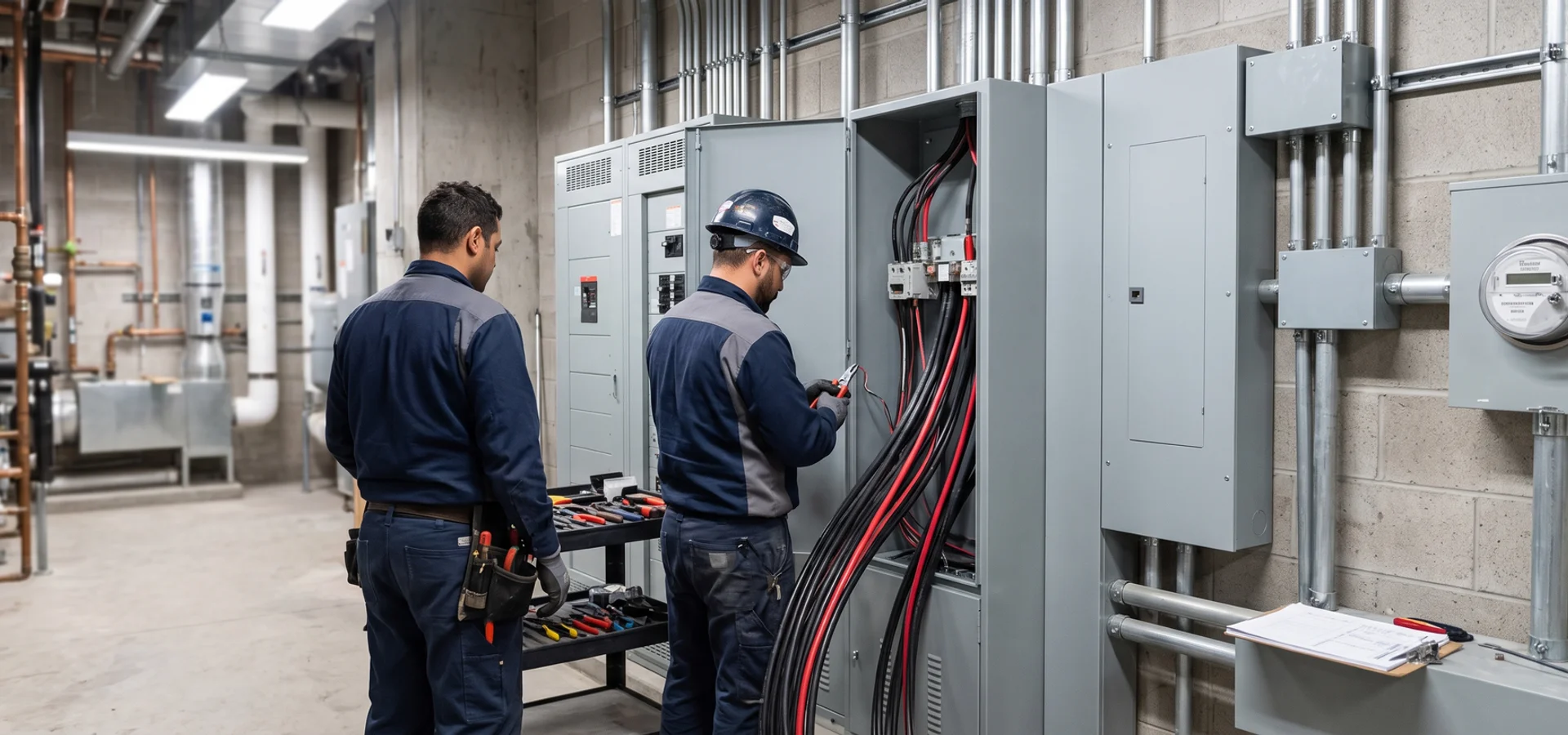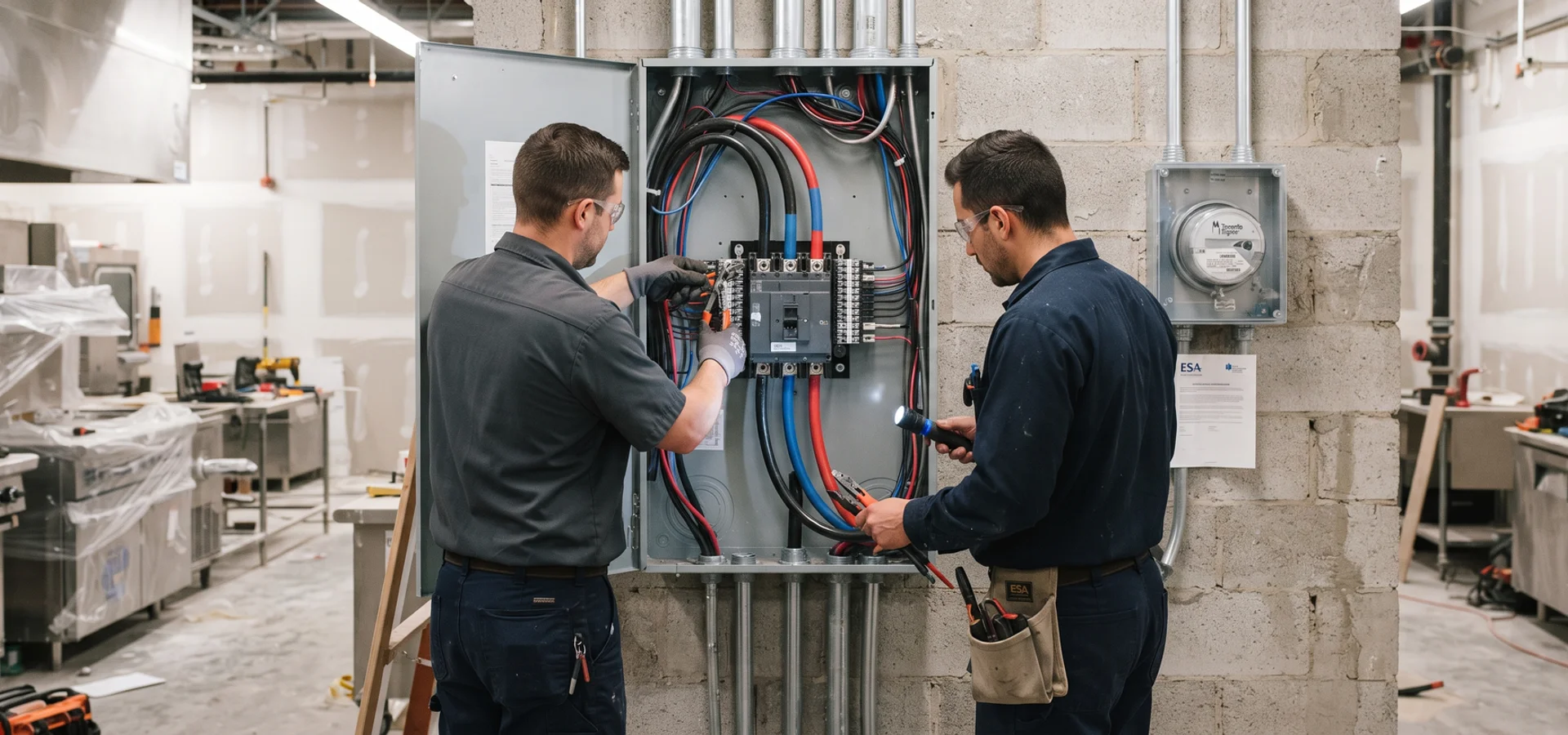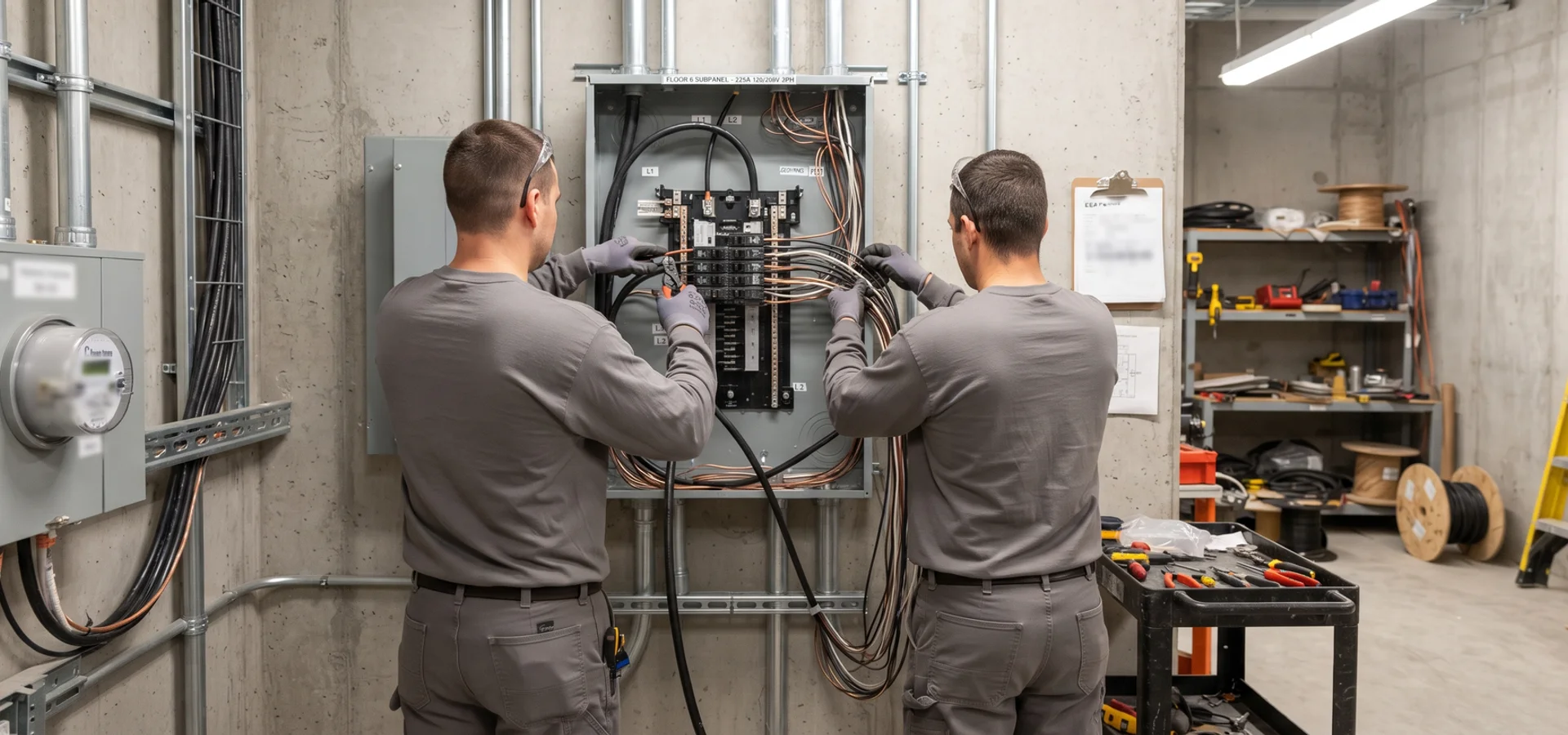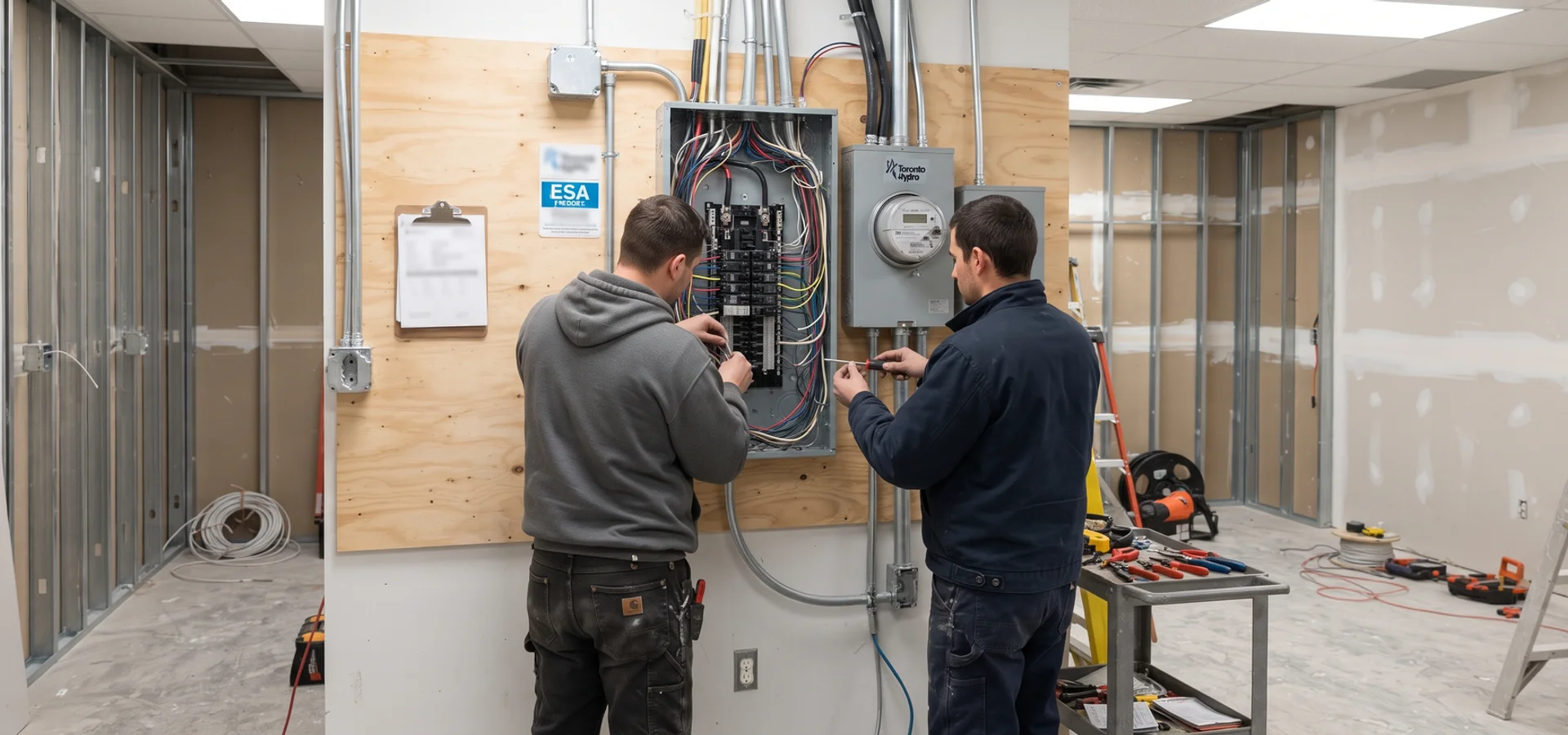
Commercial Panel Work in Toronto and the GTA
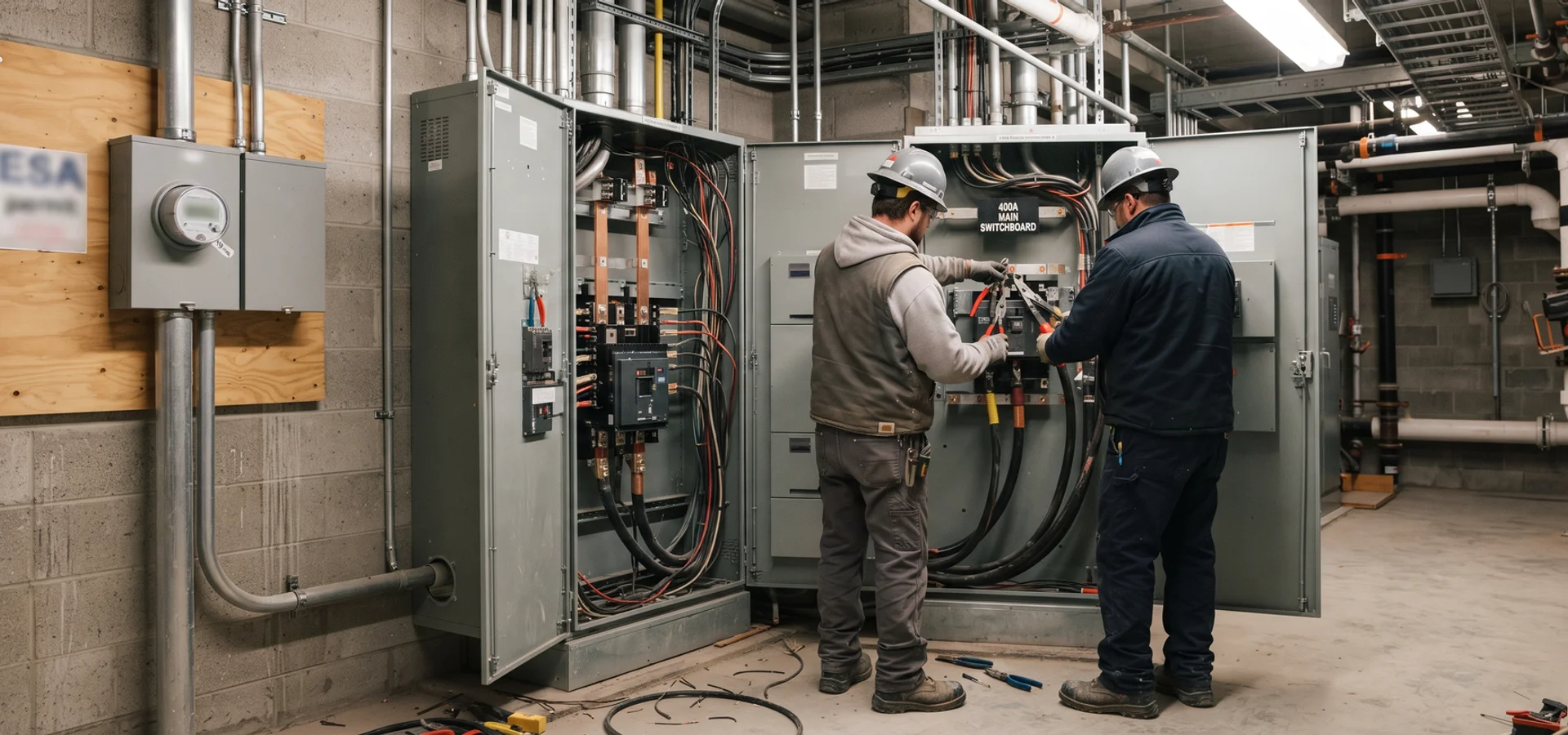
Commercial panel upgrades cover restaurants, offices, retail units and larger buildings needing 200A to 400A service. This page is the hub for every commercial service we run, and each one has its own page with the load profile, sequencing and price band for that niche.
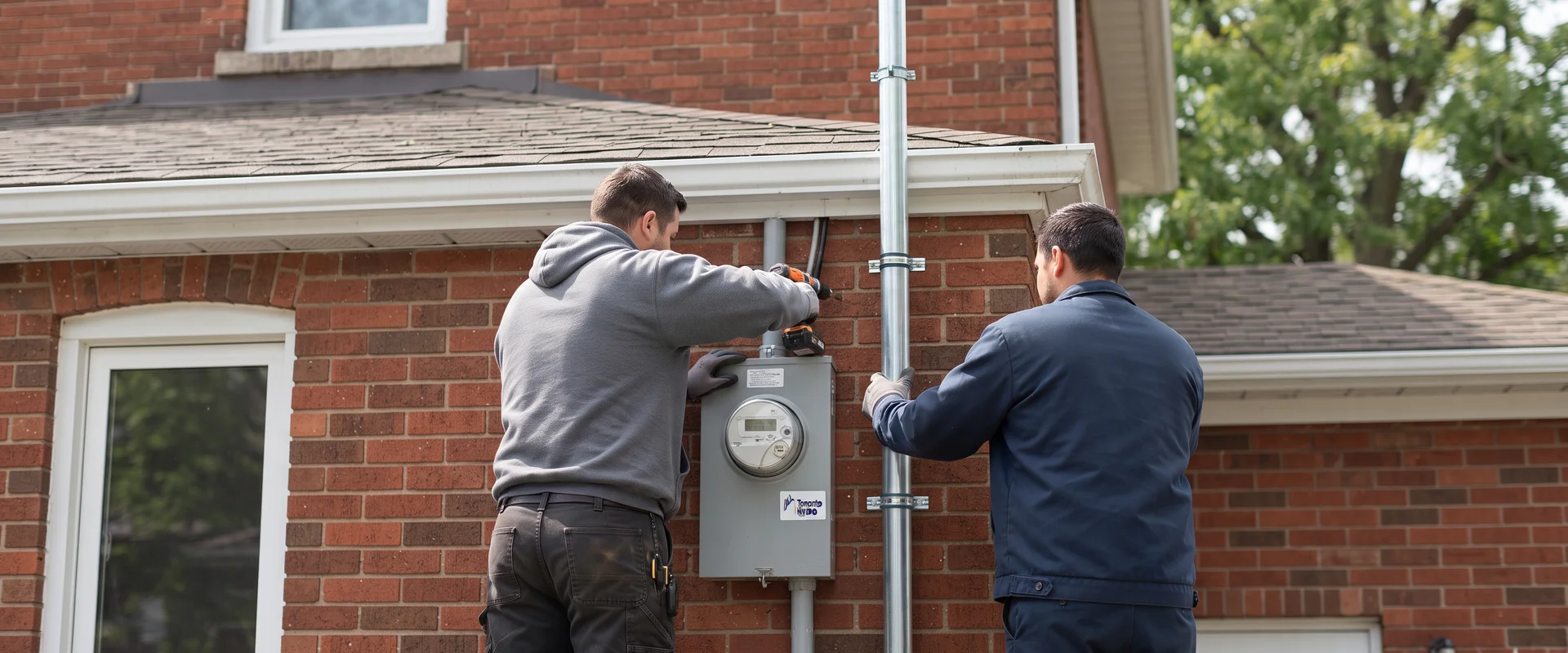
Commercial work differs from residential in three specific ways, and all three affect the schedule more than the install. Metering: above roughly 200A the utility meters through current transformers, so a CT cabinet enters the design and the utility specifies its type and position. Plan review: the Electrical Safety Authority reviews the design against the Ontario Electrical Safety Code (OESC) before installation, which means a single-line diagram, a load study and short-circuit current rating verification, with a lead time measured in weeks. Continuity: a business cannot lose power for a day, so the cutover is phased, moved after hours, or carried by temporary power.
There is also a coordination layer that does not exist on a house: landlord approvals, base-building capacity confirmation, electrical room access, after-hours work permits and tenant notification. We handle that layer directly rather than handing it back to you.
The homepage carries the full cost table and the questions we field most often: electrical panel upgrade in Toronto.
Commercial Services
- 200A to 400A service upgrades. The core commercial service change, with CT cabinet coordination, single- or three-phase supply and a load study. $5,000 to $15,000 CAD.
- Restaurant electrical upgrades. Commercial kitchen load profiles, three-phase equipment coordination and phased energization around the fit-out. $5,000 to $15,000 CAD.
- Office electrical upgrades. Per-floor and per-suite subpanels, tenant improvement coordination and after-hours cutovers. $5,000 to $15,000 CAD.
- Retail electrical upgrades. Lighting, HVAC, signage and POS loads, with base-building capacity checks and submetering. $5,000 to $15,000 CAD.
For industrial three-phase, 600V, warehouse and manufacturing work, see industrial electrical panel upgrades.
When a Commercial Property Needs an Upgrade
- A fit-out is planned. The previous tenant’s distribution rarely matches the incoming tenant’s load.
- HVAC is being replaced or added. The most common single trigger in Toronto commercial buildings.
- A commercial kitchen is going in. Appliance loads that frequently exceed what a retail unit’s service was sized for.
- Tenant loads exceed base-building capacity. A landlord’s service sized decades ago against today’s equipment.
- Breakers trip during trading. Circuits extended over successive tenancies rather than properly added.
- EV charging is being added for staff or fleet. A capacity study before a charger decision.
What Drives Commercial Cost
Whether the service itself changes is the biggest single factor, because it brings the utility, a CT cabinet and a longer plan review into scope. Phase configuration is second, as three-phase equipment and conductors cost more than single-phase. Cutover constraints are third: after-hours labour and temporary power are real costs, and they are the difference between a quiet upgrade and a disruptive one. Building access is fourth, particularly in towers where material moves on booked service-elevator windows.
The ESA plan review, the utility coordination, any after-hours premium and any temporary power are itemised separately in every quote rather than folded into a labour line.
What Every Commercial Job Includes
A load study built from your equipment or tenant schedules rather than a per-square-foot estimate. A commercial ESA plan review prepared and submitted by us. Utility and landlord coordination, including the CT cabinet arrangement and base-building capacity confirmation. A cutover plan agreed before work starts, with temporary power priced where systems cannot drop. And at handover, as-built panel schedules, the final single-line diagram, the ESA Certificate of Inspection and an itemised invoice for the building file.