What Is a 200A Service Upgrade?
A 200A service upgrade rebuilds the whole service: the main breaker, the load centre, the meter base and the service entrance conductors are all replaced to carry 200A continuously. The standard result in a Toronto home is a 42-circuit panel on a copper bus bar, with spare positions still free after every existing circuit has been transferred across.
The reason to do it is headroom. Full electrification stacks large continuous loads on top of each other: a Level 2 charger at 40A or 50A, a cold-climate heat pump with backup heat, an induction range, electric water heating, and in many cases a basement-suite subpanel. Any two of those defeat a 100A service on an OESC Section 8 demand calculation. All of them together need 200A.
This work is scheduled rather than immediate, because the utility has to pull the meter and de-energize the service before the meter base and conductors can be replaced. We file the ESA Notification of Work, submit the service layout for approval, book the disconnect, install, inspect and hand over the certificate.
If you are currently on 100A, the same project is described from that starting point under 100A to 200A service upgrades. For the full residential range, see residential electrical panel upgrades.
Types of 200A Installation
- Overhead mast with panel in position. New mast, weatherhead, meter base and conductors, with the load centre in the same place. The cleanest version.
- Overhead with panel relocation. Where the existing panel position fails the working-space rules, the new load centre moves and the feeder is rerouted.
- Underground lateral. The lateral, meter base and panel are all replaced, with trenching and conduit priced separately.
- 200A with a suite subpanel. The service upgrade plus a 60A or 100A subpanel on a four-wire feeder, done as one project. See basement suite electrical upgrades.
When You Need 200A
- Two or more large electric loads. Charger plus heat pump, or heat pump plus induction range and electric water heating.
- A 100A panel with no spare positions. Capacity and position count are separate problems, and 200A solves both at once.
- A basement suite in the plan. A second dwelling unit needs its own subpanel and disconnect on top of the main dwelling’s load.
- A hot tub or pool. Dedicated 240V loads with GFCI disconnects that eat capacity on a 100A service. See hot tub electrical upgrades.
- You are already replacing the panel. If the load centre is failing anyway, the incremental cost of upgrading the service at the same time is small compared to doing it later.
What Drives the Cost Between $2,500 and $8,000
Service type is the biggest factor: an underground lateral with trenching costs materially more than an overhead mast replacement. Conductor run length sets the amount of copper and conduit between the meter base and the panel. Panel position decides whether a relocation and feeder reroute is needed. Added scope from the calculation is the fourth, covering a grounding electrode conductor that has to be run, a subpanel the plan requires, or dedicated circuits installed at the same time.
The ESA permit fee is included and the utility coordination fee is itemised. Where something found after the service is opened changes the scope, work stops and you get a revised written quote first.
What to Expect on Install Day
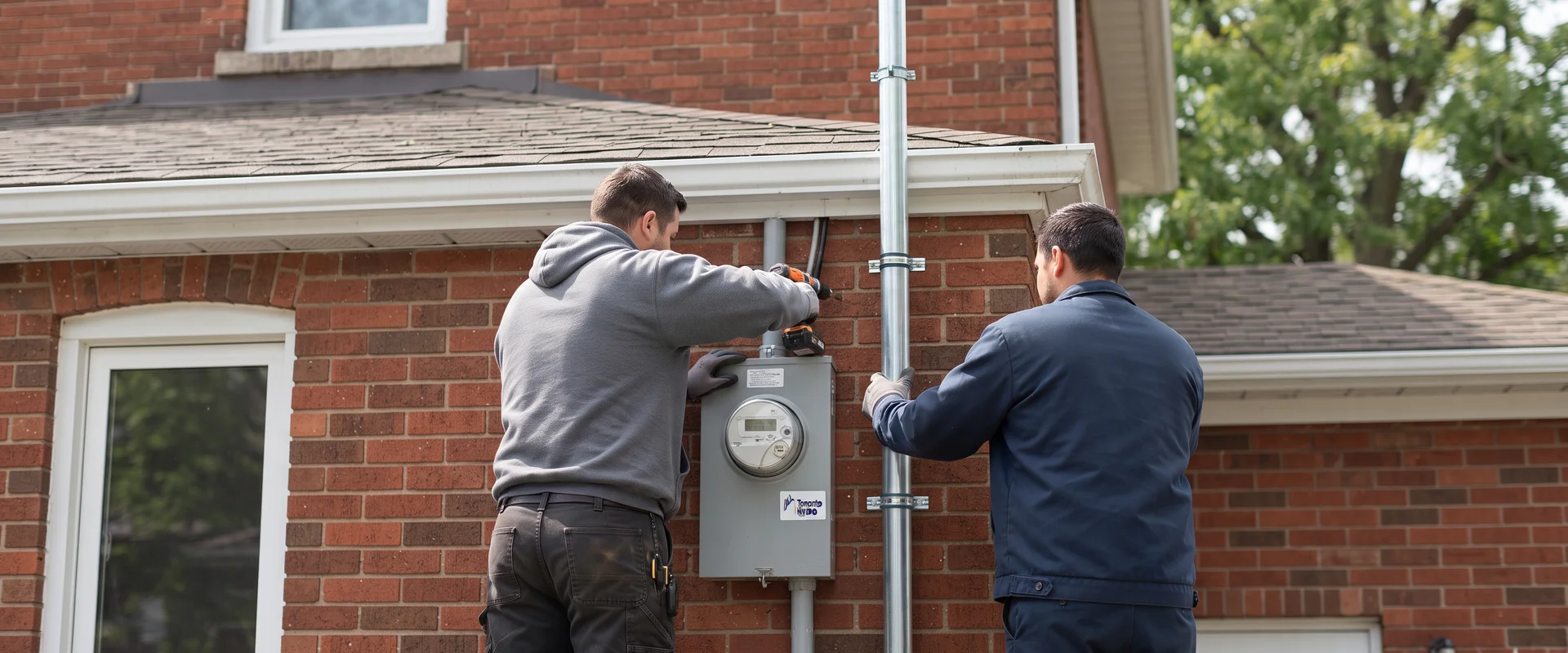
The utility arrives in the morning to pull the meter and drop the service. We remove the old load centre, replace the mast and weatherhead or underground lateral, fit the new 200A-rated meter base, pull the service entrance conductors, and mount the 42-circuit load centre.
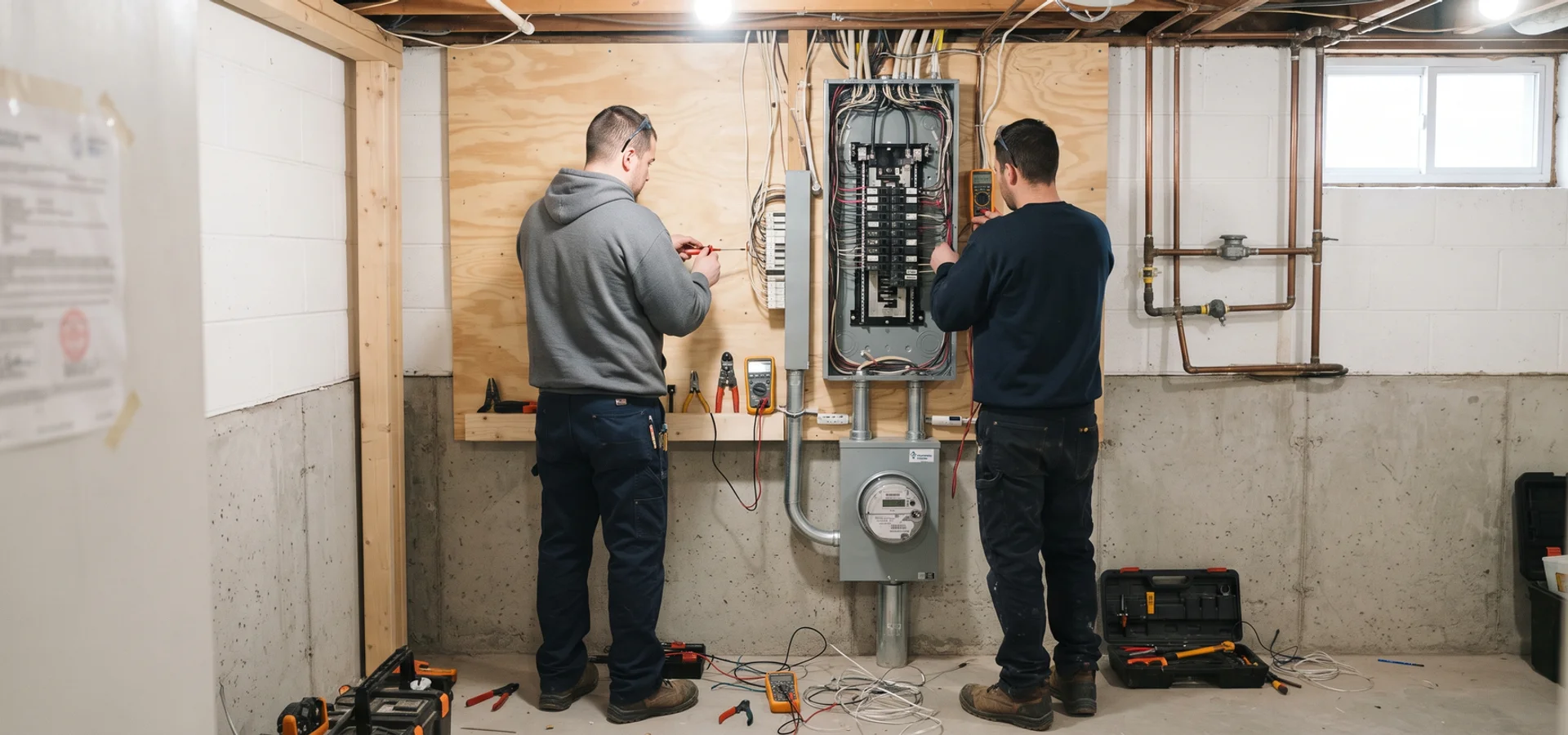
Existing circuits transfer onto correctly sized breakers. Positions for the loads you are adding, the EV circuit, the heat pump feeder, the range, are reserved and labelled even if the appliances have not arrived yet, so the HVAC or charger installer finds a circuit waiting. Terminations are torqued to specification, the neutral bar is bonded, and the grounding electrode conductor is verified.
The ESA inspector attends, the utility reconnects and sets the meter, and power is back the same afternoon on a standard overhead job. You get the Certificate of Inspection, the panel schedule fixed inside the door, and an invoice matching the quote.