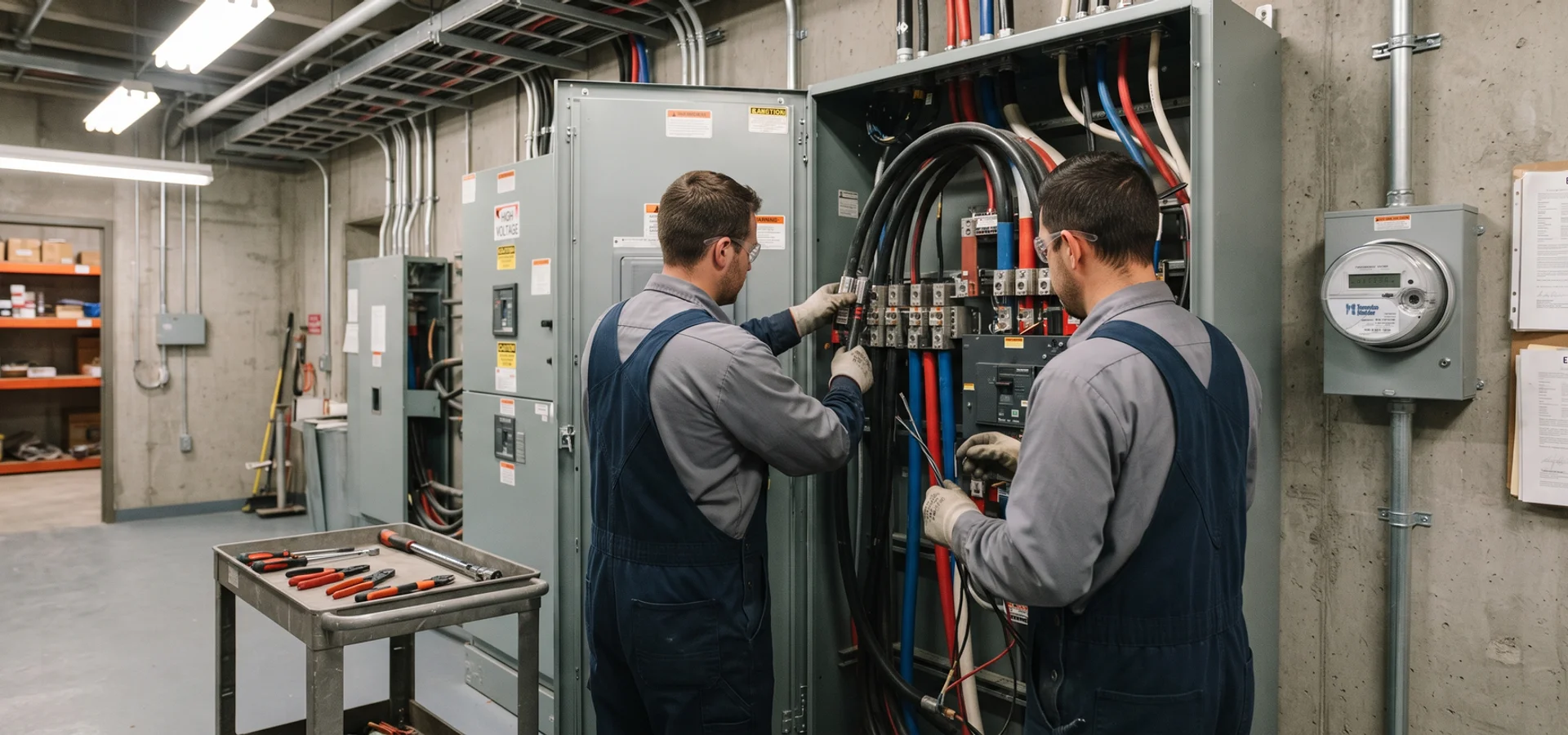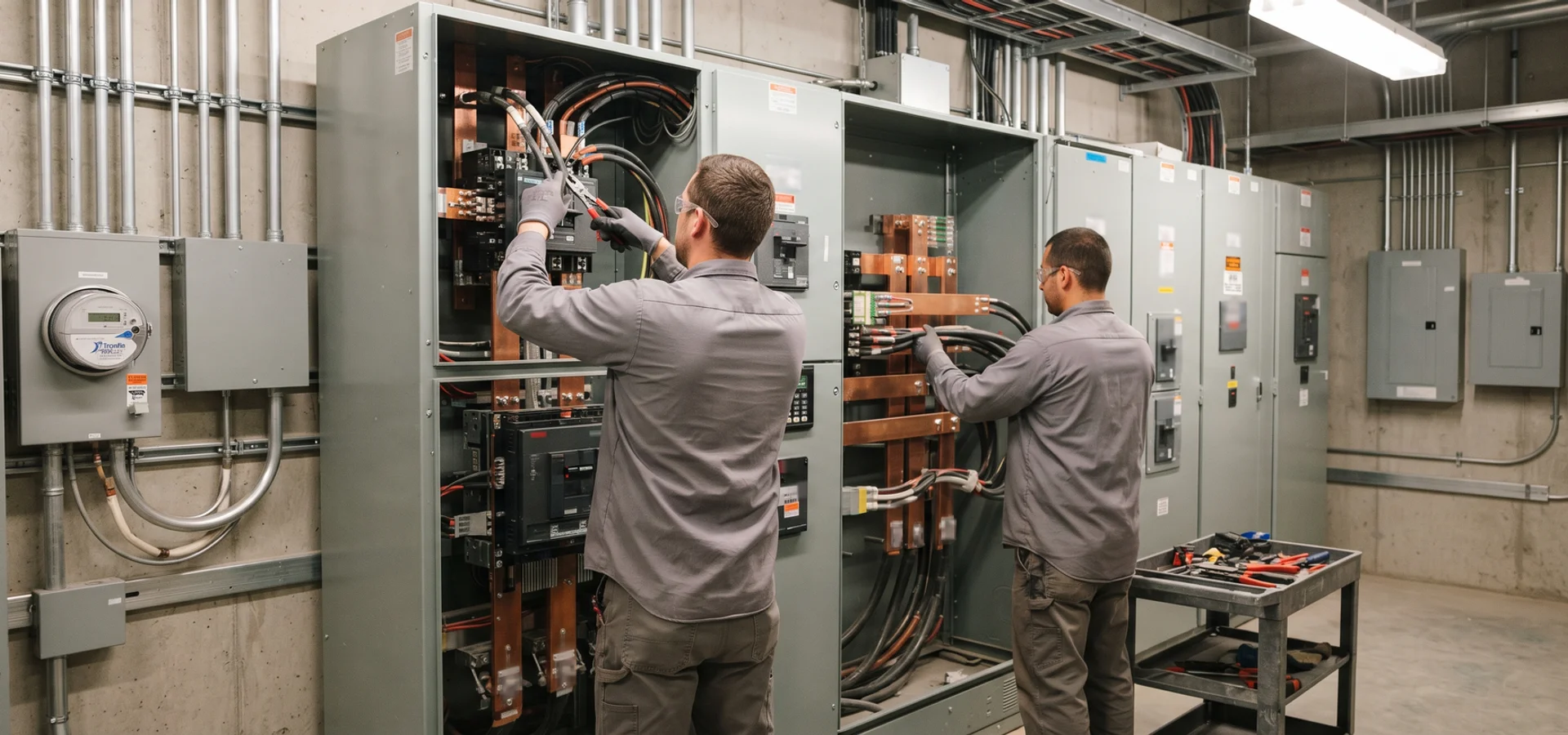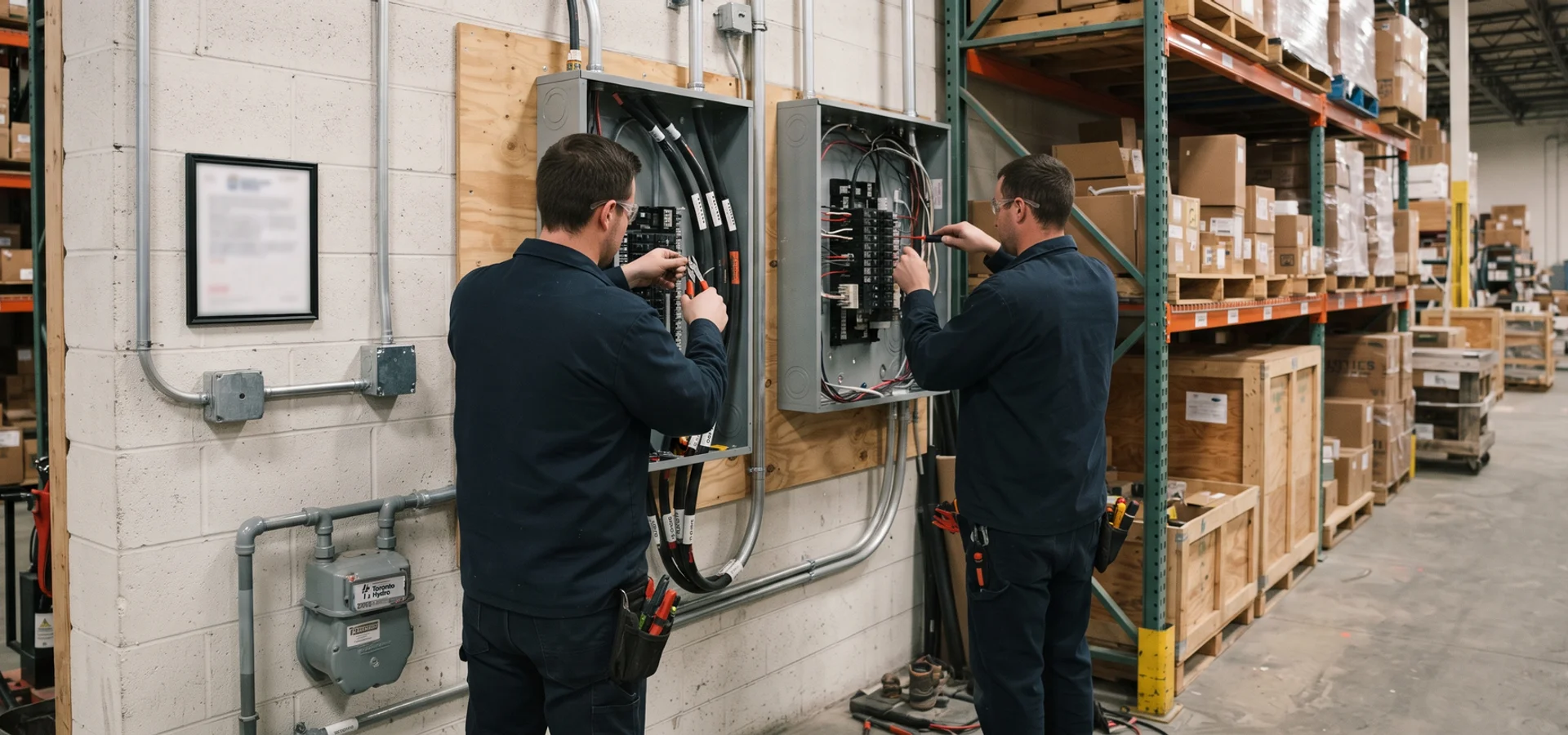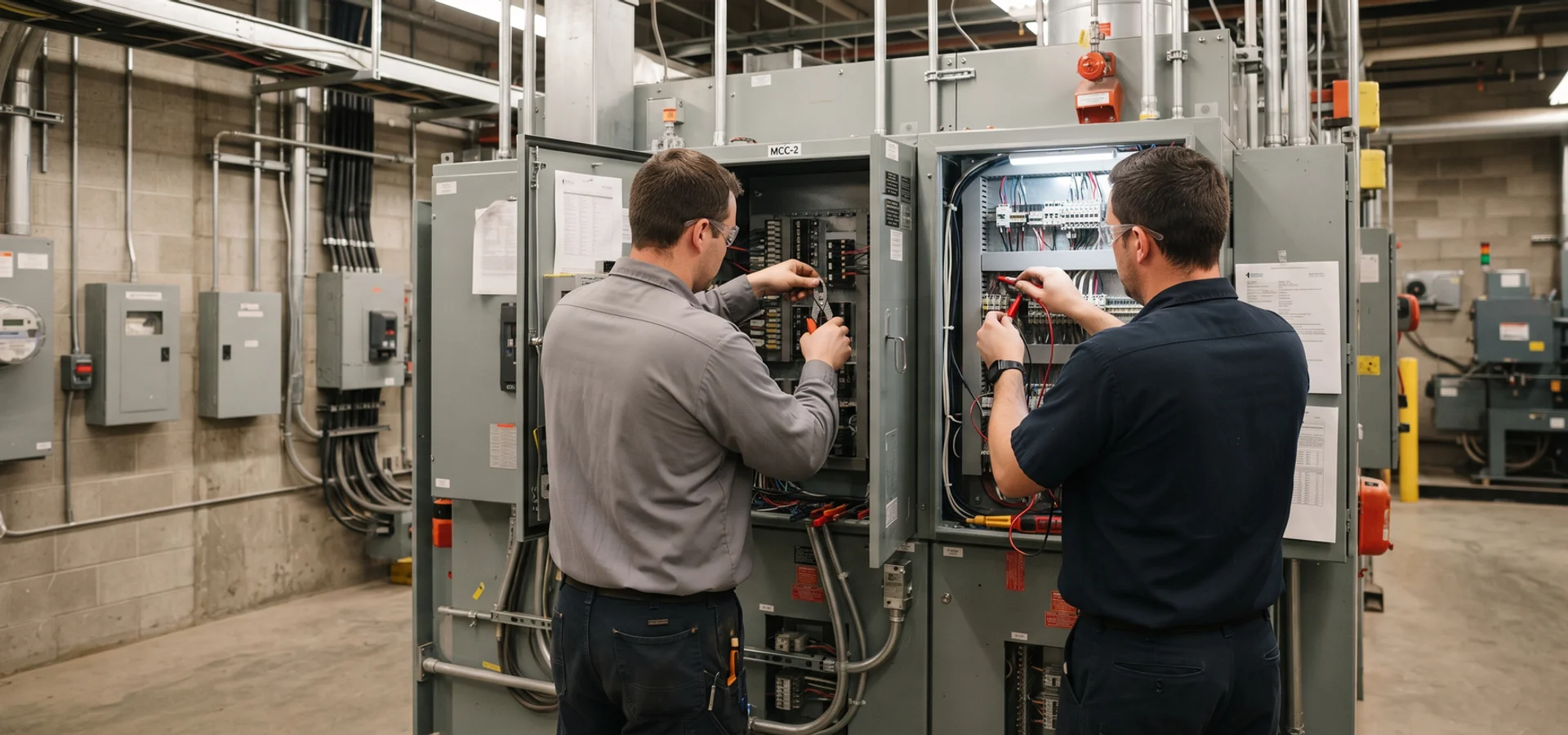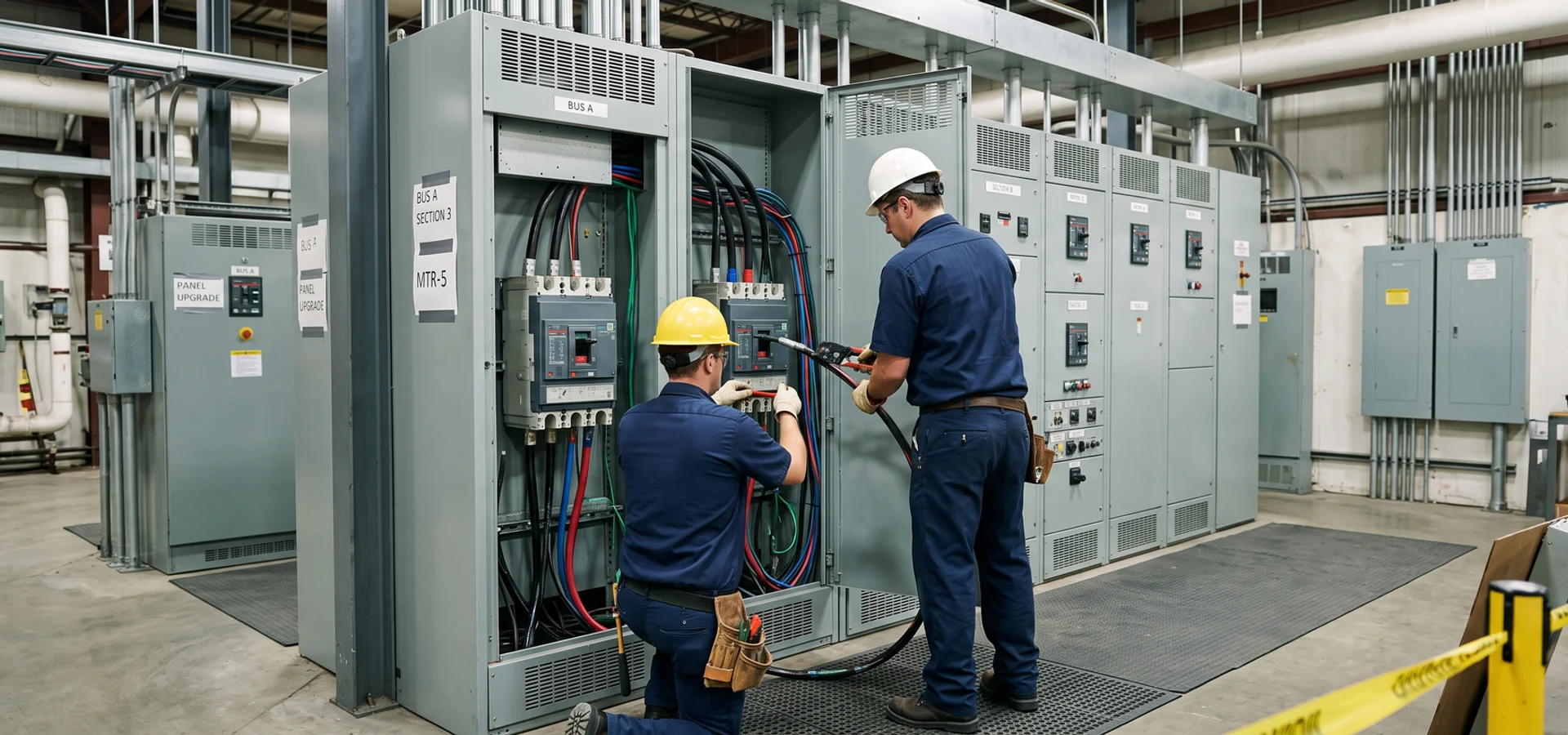
Industrial Service Work Across the GTA
Industrial service upgrades cover warehouses, manufacturing facilities, three-phase service and 600V distribution. This page is the hub for every industrial service we run, and each one has its own page with the load profile, sequencing and price band for that scope.
Industrial work is defined by two things that do not apply to a house or a retail unit. The first is the load profile: motors have starting currents several times their running current, duty cycles that affect heating, and simultaneity patterns that depend on how the plant is actually operated. A study that sums nameplates gets it wrong in both directions, undersizing feeders while over-specifying switchgear. Every design still has to satisfy the Ontario Electrical Safety Code (OESC) and clear ESA plan review before it gets built.
The second is downtime. A production line and a distribution centre both have a value per hour, so the project is built around your shutdown calendar. Switchgear gets set and feeders get pulled while operations continue, because none of that work touches live circuits. Transfers happen in agreed windows.
Behind both sits the utility. A new three-phase or 600V service normally needs transformer, vault or primary work, priced and scheduled by the utility, with lead times measured in weeks to months. On a full service conversion that is frequently the largest cost in the project, and we put it in front of you at the start rather than letting it appear late.
The homepage carries the full cost table and the questions we field most often: electrical panel upgrade in Toronto.
Industrial Services
- Three-phase electrical service upgrades. 120/208V or 347/600V supply, switchgear and distribution, with a load study and utility transformer coordination. $5,000 to $15,000 CAD.
- 600V electrical service upgrades. 347/600V distribution for heavy motor loads and long runs, with step-down transformers for 120/208V circuits. $5,000 to $15,000 CAD.
- Warehouse electrical upgrades. Zone distribution, forklift charging bays, dock equipment circuits and phased work around operations. $5,000 to $15,000 CAD.
- Manufacturing facility electrical upgrades. Switchgear, motor control centres, machine feeders and commissioning against the production schedule. $5,000 to $15,000 CAD.
For commercial restaurants, offices, retail and 400A service work, see commercial electrical panel upgrades.
When a Facility Needs Distribution Work
- New or replacement machinery. Nameplates on new equipment frequently exceed the feeders serving the old.
- A cell or line expansion. New feeders, starters and disconnects, plus a re-check of simultaneity across the plant.
- Breakers trip on simultaneous starts. The signature of distribution sized on running current alone.
- No spare switchgear sections or MCC buckets. The reason every subsequent equipment change becomes a project.
- Charging fleets being added. Forklift or vehicle charging, which is a demand-profile question first.
- Fault current has changed. After any service upgrade, equipment ratings need re-verification.
- Maintenance cannot isolate equipment. Missing local disconnects is an operational and a safety problem.
What Drives Industrial Cost
Switchgear and MCC scope leads within the contractor portion, since sections and buckets are the largest equipment items. Voltage class is second, because 600V equipment and step-down transformers cost more than 120/208V. Feeder count and routing is third, particularly where runs are long or at height. Shutdown constraints are fourth, because work compressed into short windows needs more crew for less time.
Utility infrastructure sits outside the contractor scope entirely and is quoted separately, because it is priced by the utility and cannot be discounted or accelerated by a contractor.
What Every Industrial Job Includes
A load study modelling running current, starting current, duty cycle and simultaneity, with a growth allowance for planned equipment. Utility supply confirmation before anything is specified. A commercial ESA plan review prepared and submitted by us, including short-circuit current rating verification against actual available fault current. A schedule built from your shutdown calendar. Phase rotation verified and documented before first start on every affected machine. And at handover, tagged feeder records, switchgear and MCC schedules, the as-built single-line diagram, the ESA Certificate of Inspection and an itemised invoice.