What Is an EV Charger Electrical Upgrade?
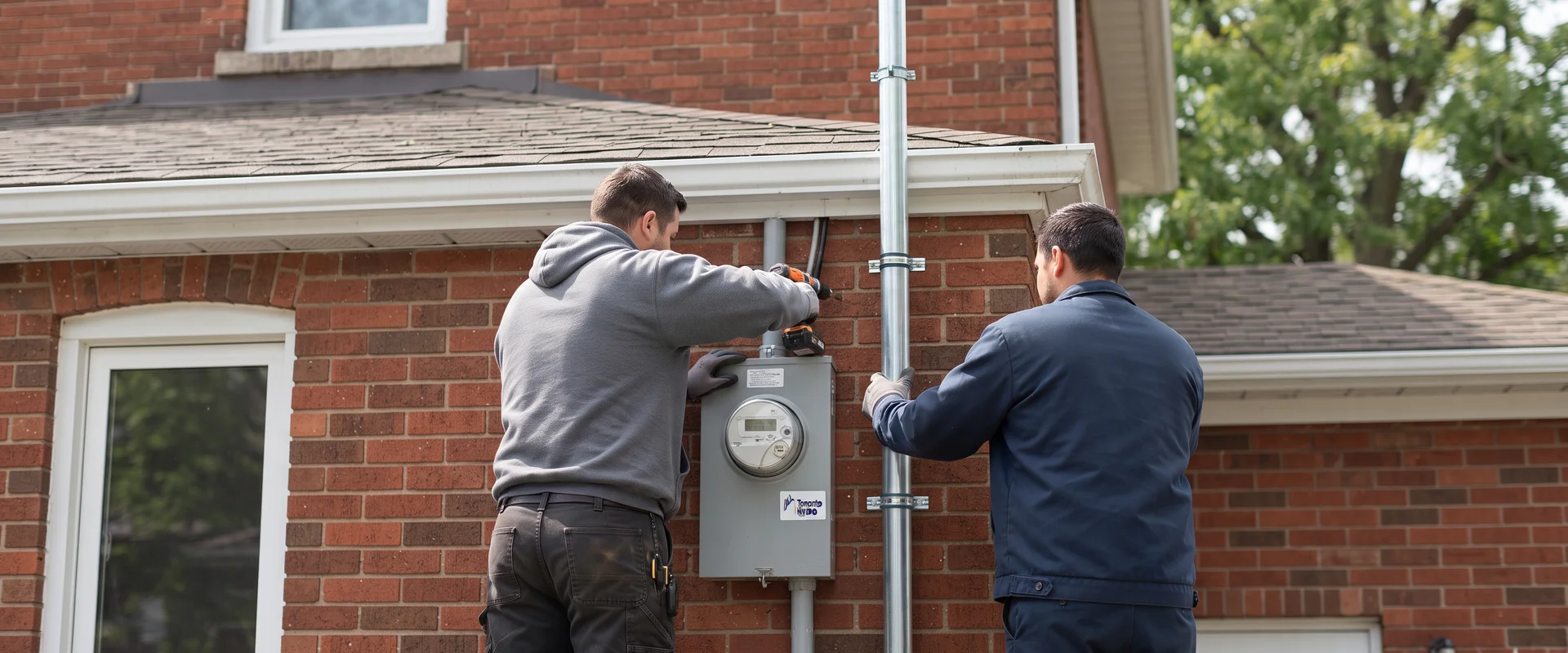
An EV charger electrical upgrade is the panel-side work that makes Level 2 EVSE (electric vehicle supply equipment) charging possible: a dedicated 240V branch circuit at 40A or 50A, sized to the Ontario Electrical Safety Code’s continuous-load rules, terminating in either a NEMA 14-50 receptacle or a hardwired charging station.
The complication is capacity. The code treats EV charging as a continuous load, so a 40A charger needs a 50A circuit and a 48A charger needs a 60A circuit. On an OESC Section 8 demand calculation, that consumes far more headroom than the nameplate suggests. A 100A service with electric laundry, air conditioning and a full panel often cannot take it.
That leaves three honest paths, and the calculation decides which applies: run the circuit if there is capacity and a free position, install an EVEMS device, sometimes called a DCC (demand charge controller), to manage demand if the service is tight, or upgrade the service if you are adding other electric loads anyway. We price the realistic options side by side rather than defaulting to the biggest one.
For the service upgrade path, see 200A service upgrades. For the rest of the residential range, see residential electrical panel upgrades.
The Three Paths
- Circuit only. Panel has capacity and two free positions. A dedicated 40A or 50A circuit in conduit to the garage or driveway wall. $800 to $2,200 CAD.
- EVEMS or demand charge controller. The device monitors total service demand and throttles or interrupts the charger when the house draws heavily, which lets a charger sit on a service that could not otherwise support it. $1,500 to $3,500 CAD.
- Service upgrade with the circuit included. The right answer when a heat pump, induction range or suite is also on the plan. $3,500 to $8,000 CAD as one project.
- Detached garage feed. A feeder and small subpanel in the garage, with a buried or overhead run priced separately.
When You Need Panel Work Before Charging
- The panel has no free positions. Every slot tandemmed and no knockouts left means a breaker cannot simply be added.
- You are on a 100A service with electric laundry and air conditioning. The combination that most often fails the calculation.
- You are on a 60A service. A charger is not viable. That is a service upgrade conversation. See 60A to 100A service upgrades.
- You want the full 48A output. A 60A circuit and a hardwired station, which most older panels cannot supply without help.
- Two vehicles. Two Level 2 chargers is a 200A conversation, sometimes 400A on a large home.
- The charger came with the car and you want it working properly. Portable units on a 14-50 receptacle still need a correctly sized dedicated circuit and a permit.
What Drives the Cost Between $800 and $8,000
Path is the biggest variable, as above. Run length and route is next: a panel on the far side of the basement from an attached garage means conduit, drilling and fire-stopping, and a detached garage means a feeder and possibly trenching. Charger type matters because a hardwired 48A station needs a 60A circuit and heavier conductors than a 40A receptacle install. Panel condition is the fourth: if the load centre is also at end of life, replacement enters the scope.
The ESA permit fee is included in every path. Rebate and incentive programs generally require the ESA documentation, so the permit is not optional in practice either.
What to Expect on Install Day
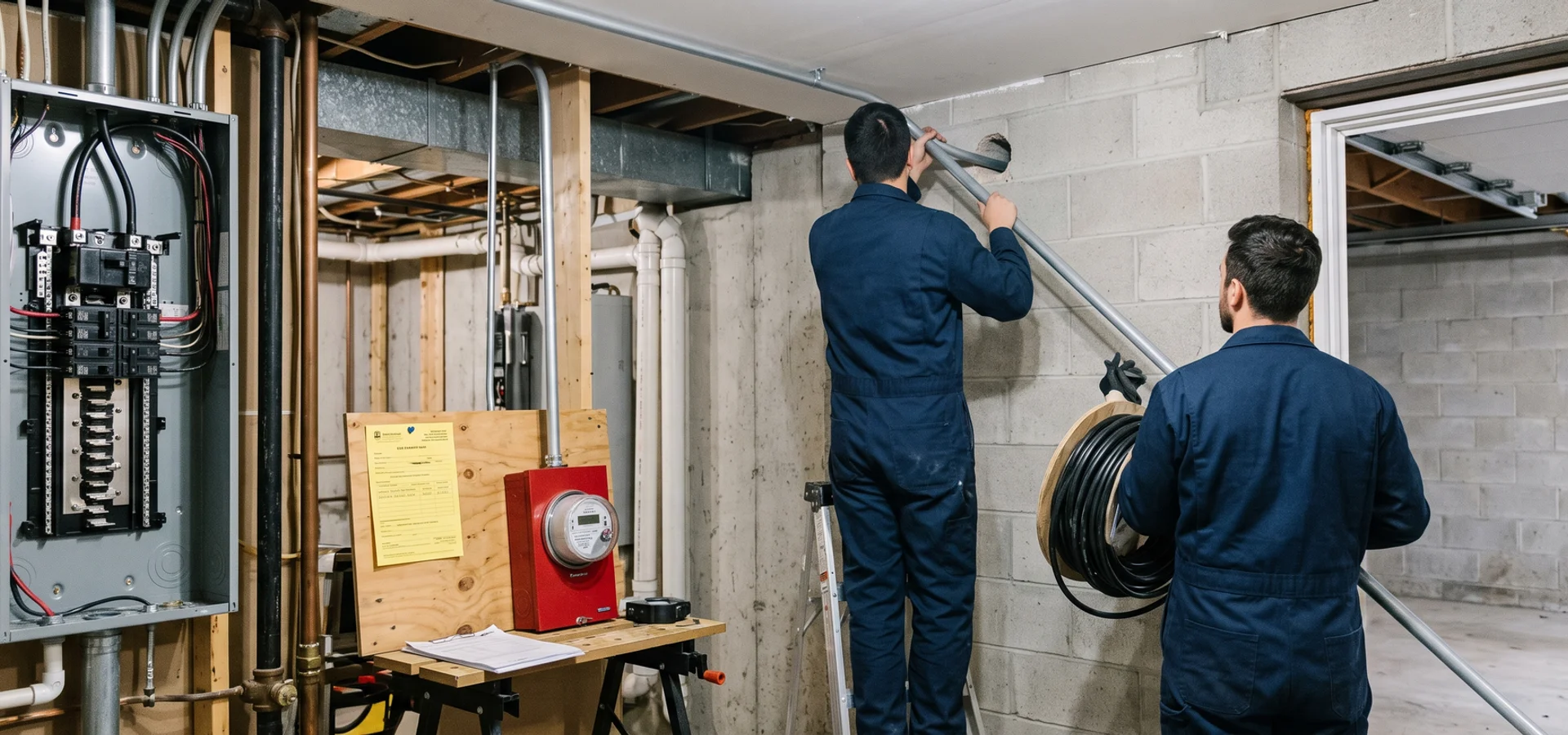
We start at the panel: confirm the calculation, set the correctly sized dual-pole breaker, and route the circuit. Conduit runs along joists and walls rather than loose cable draped across the basement, and penetrations are sealed. On a detached garage the feeder terminates in a small subpanel with isolated neutral and ground.
At the vehicle end we position the receptacle or station where the charging cable actually reaches the car’s port, which matters more than it sounds. A labelled disconnect goes in where the installation requires one. The panel schedule is updated so the EV circuit is identified for anyone opening the panel later.
The ESA inspector reviews the circuit, and once the Certificate of Inspection is issued the charger is energized and tested under load. If you are pursuing a rebate, the certificate is the document those programs ask for.