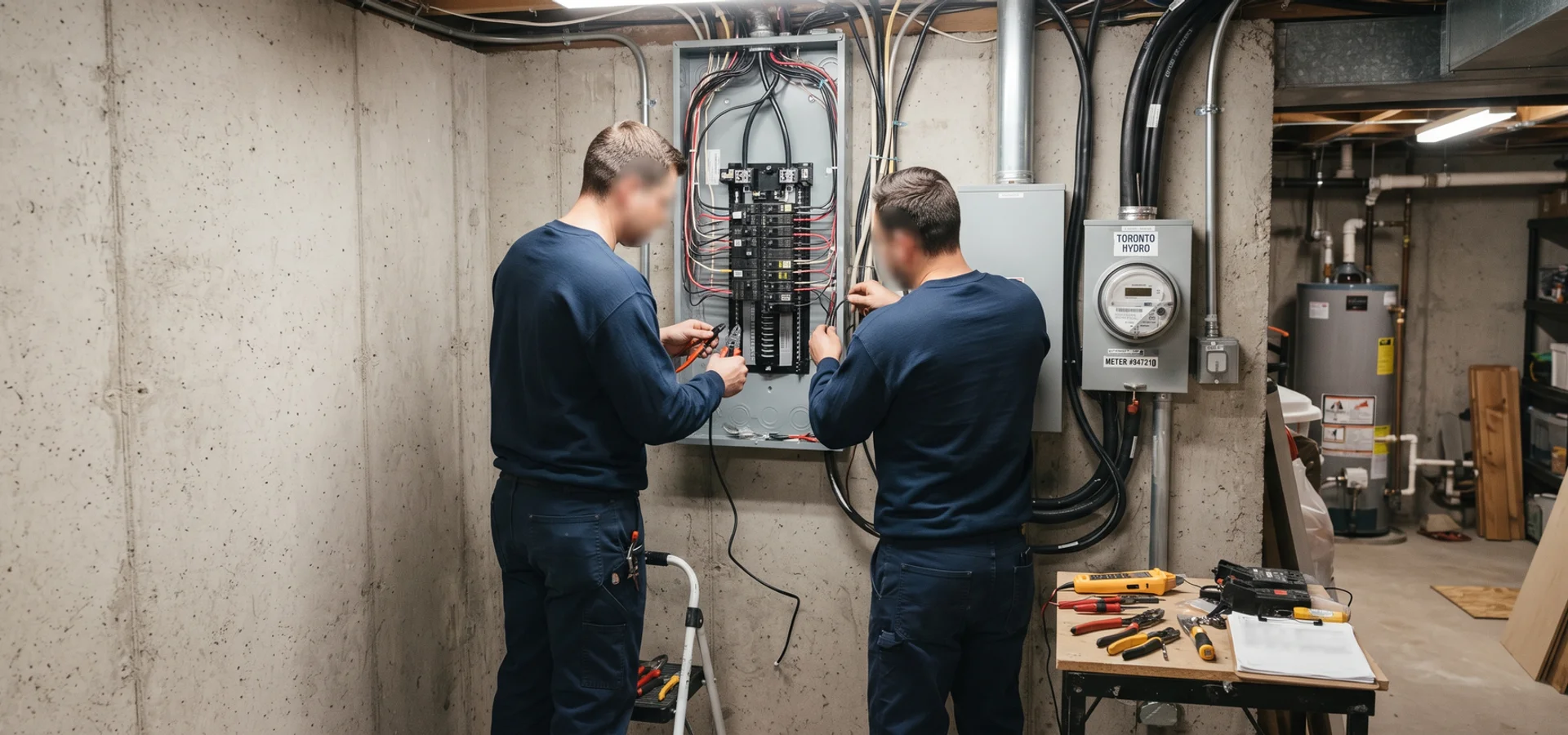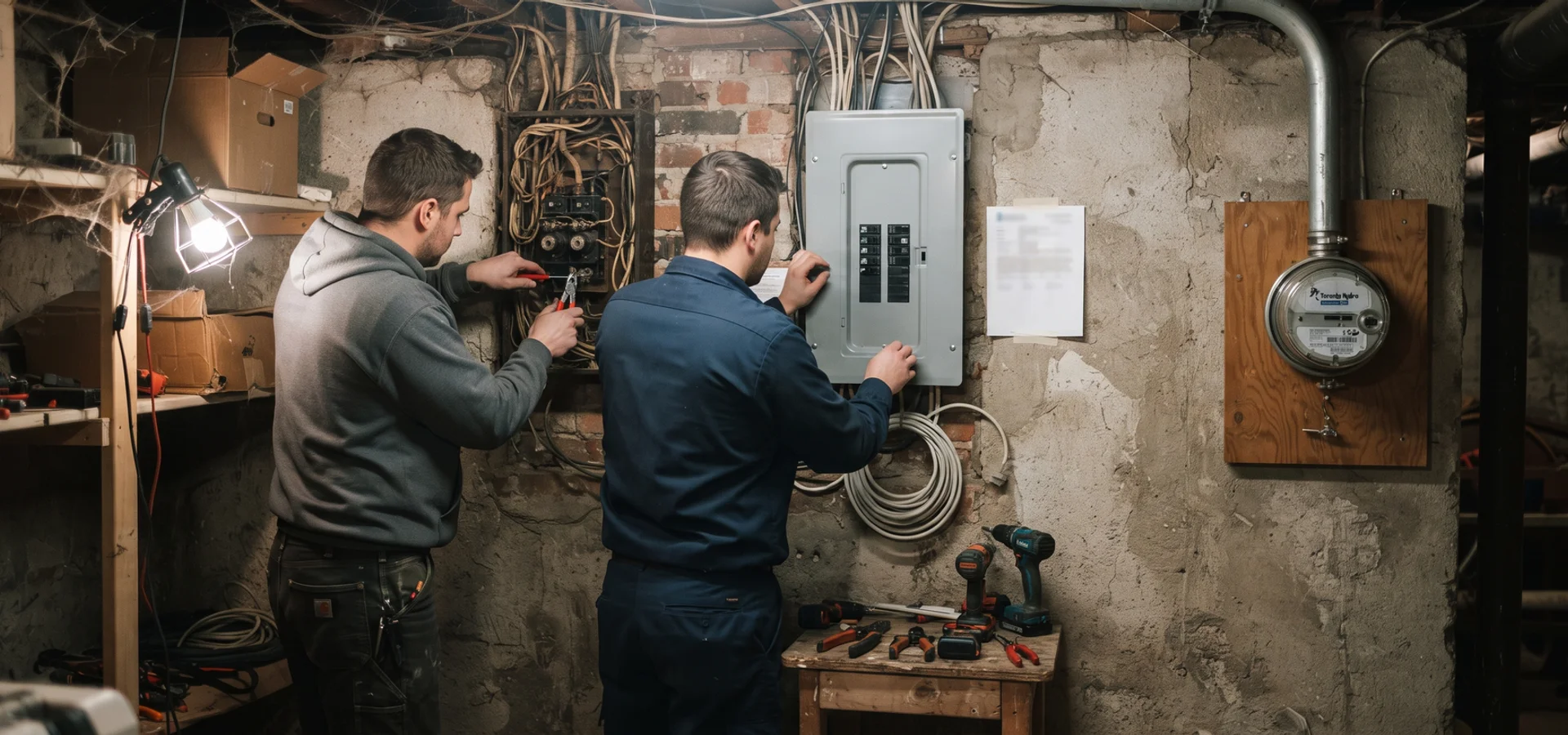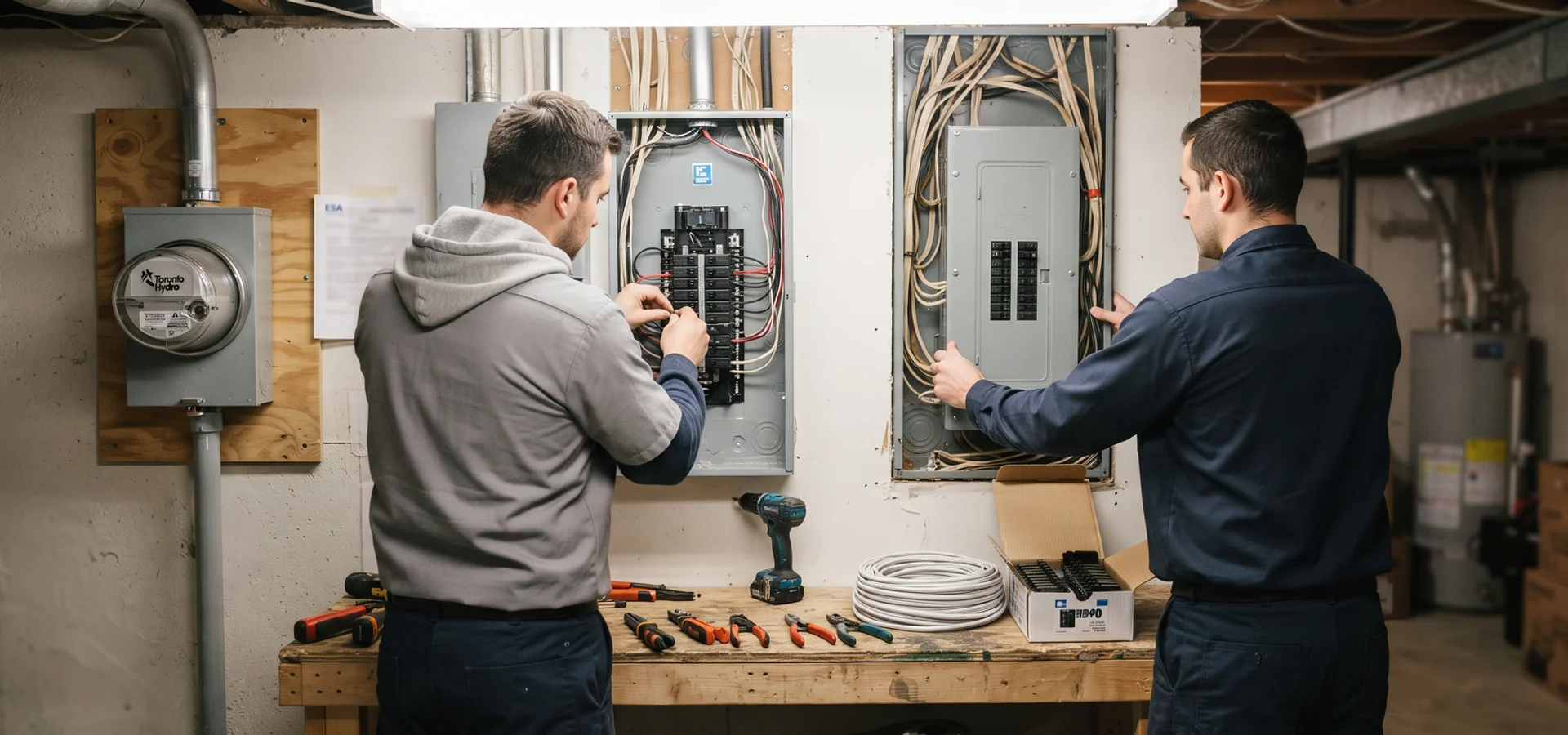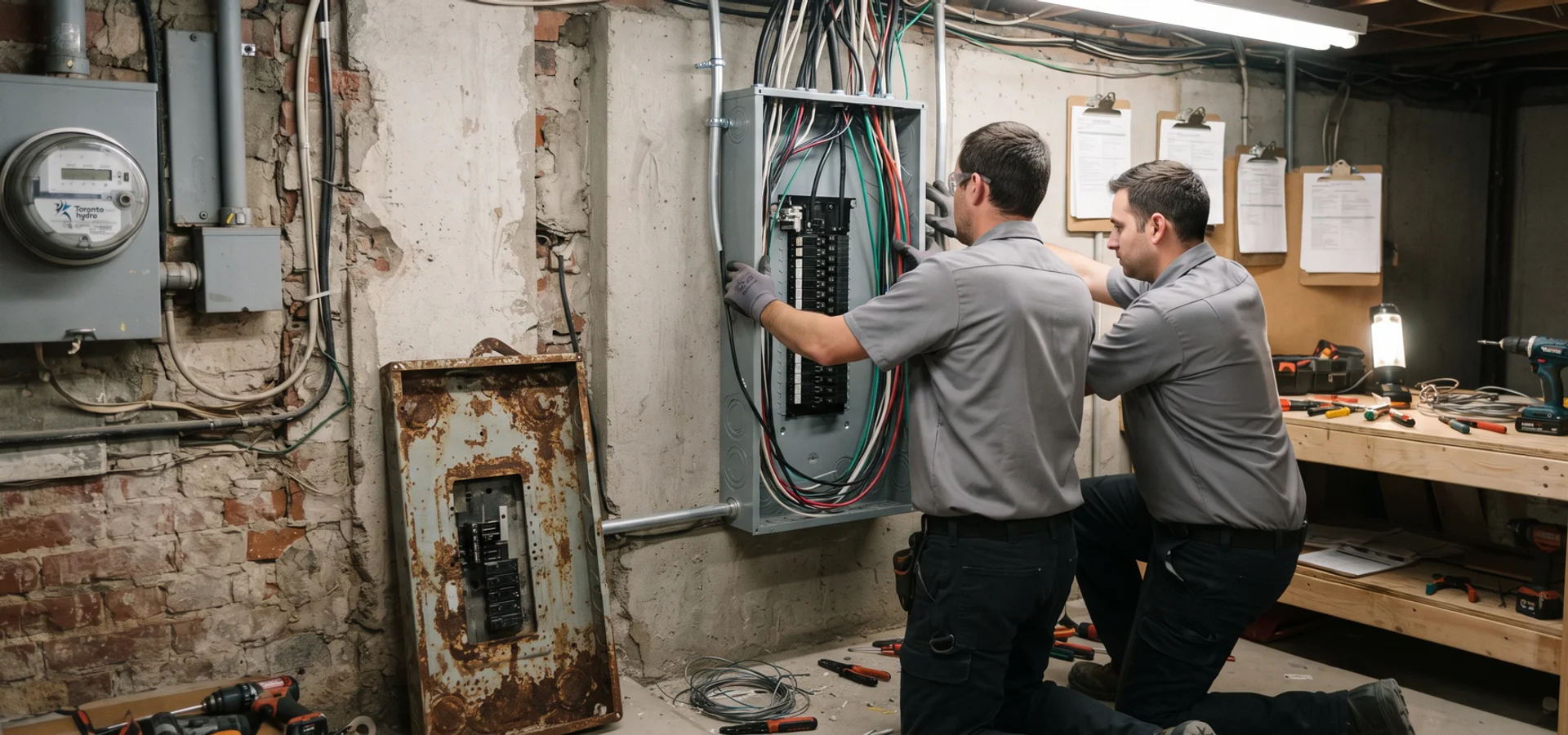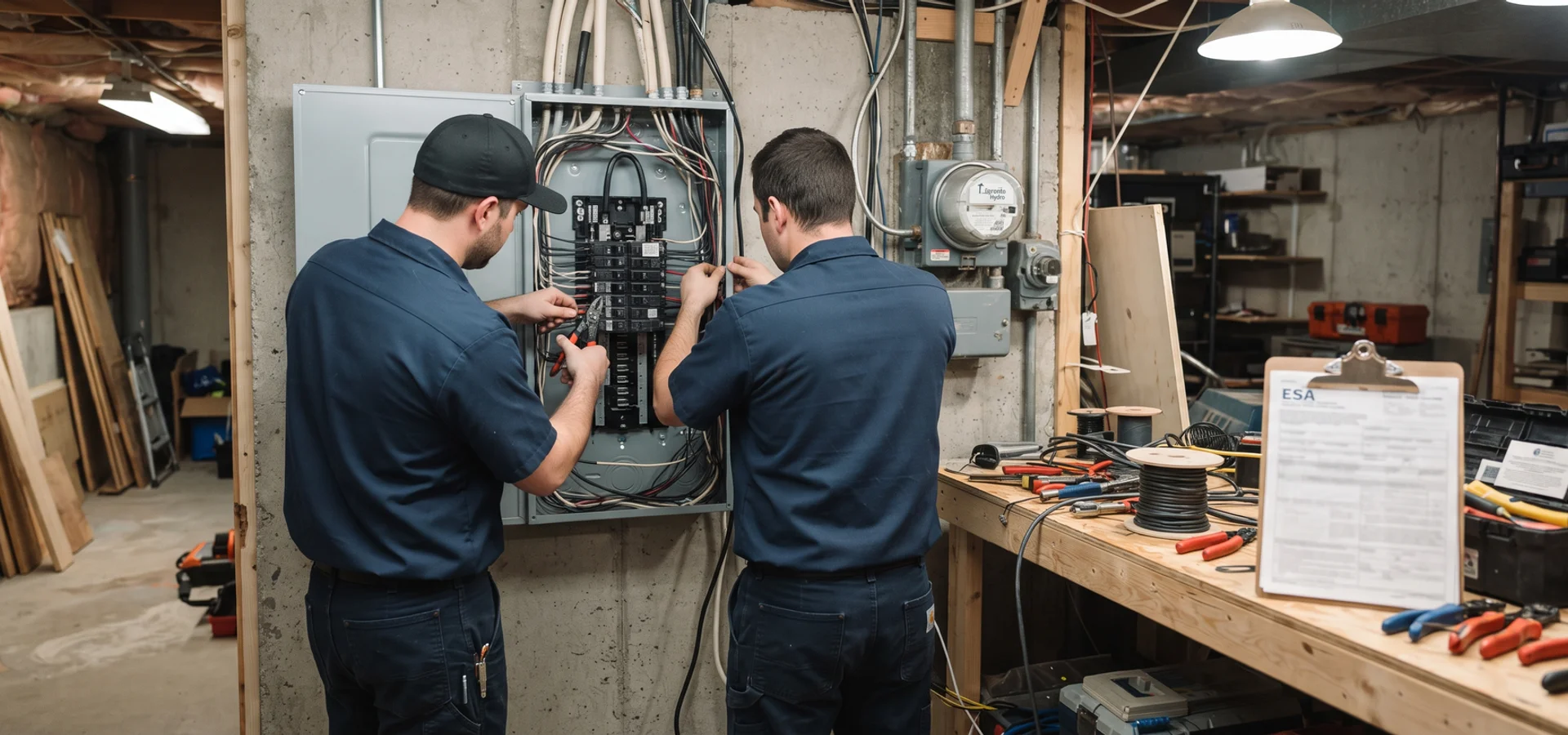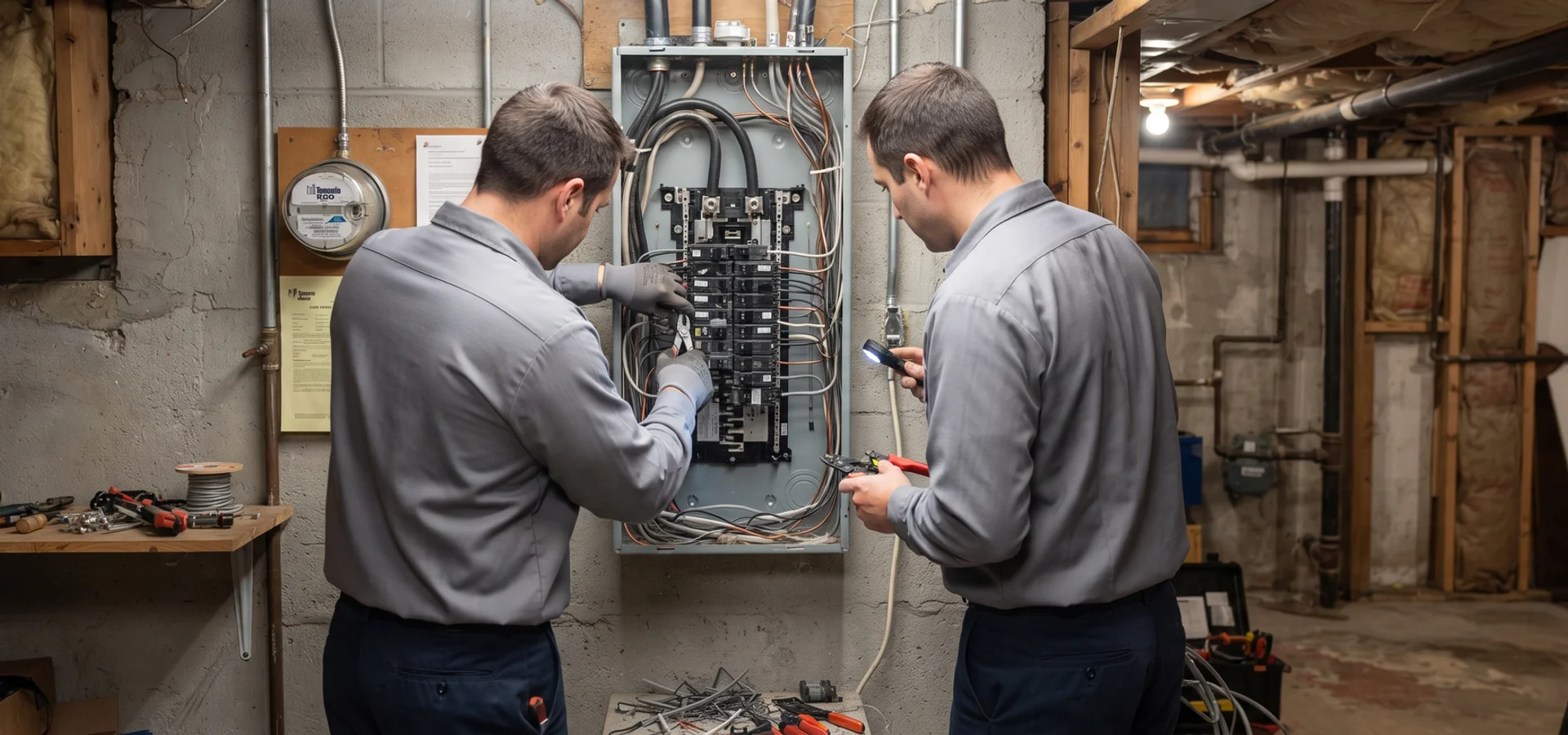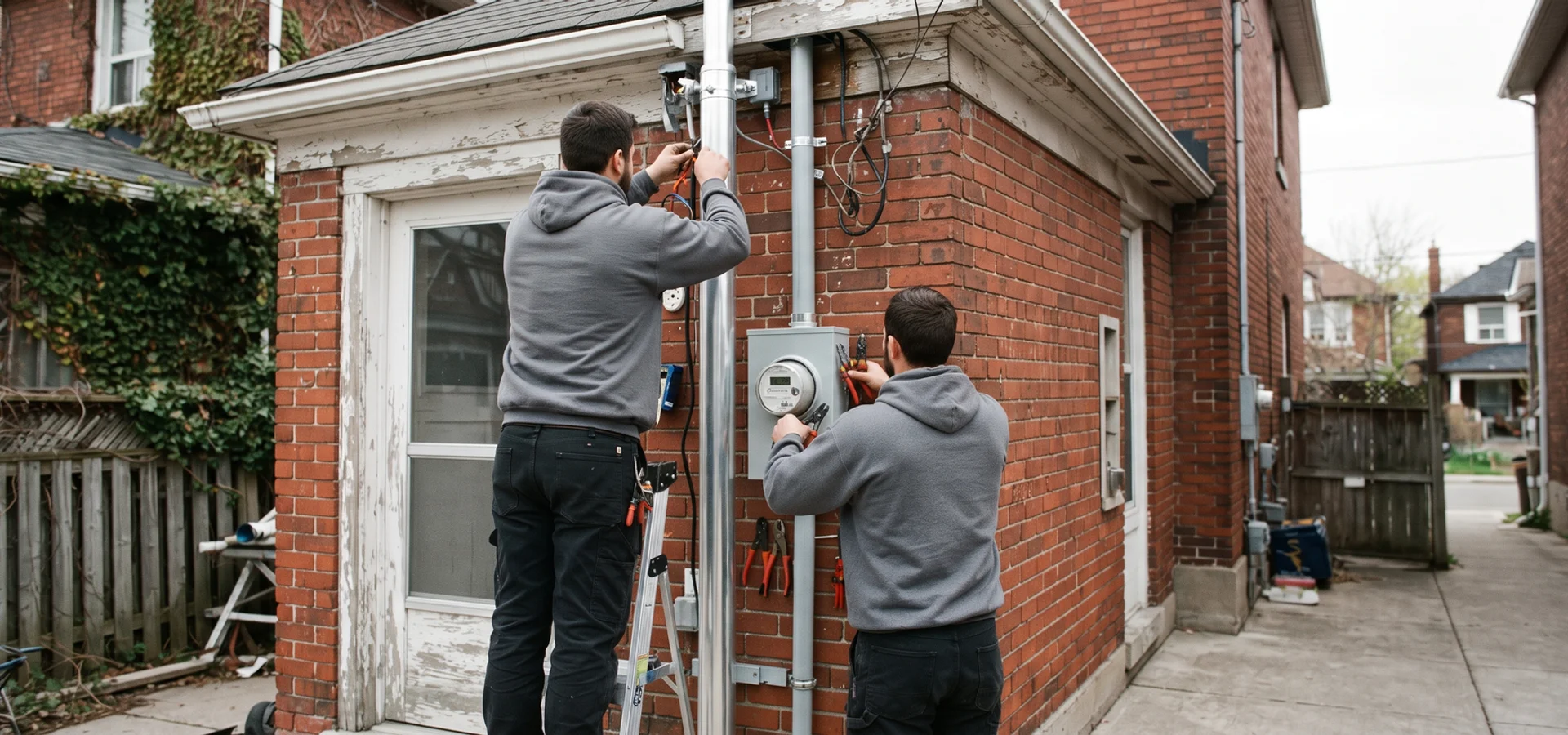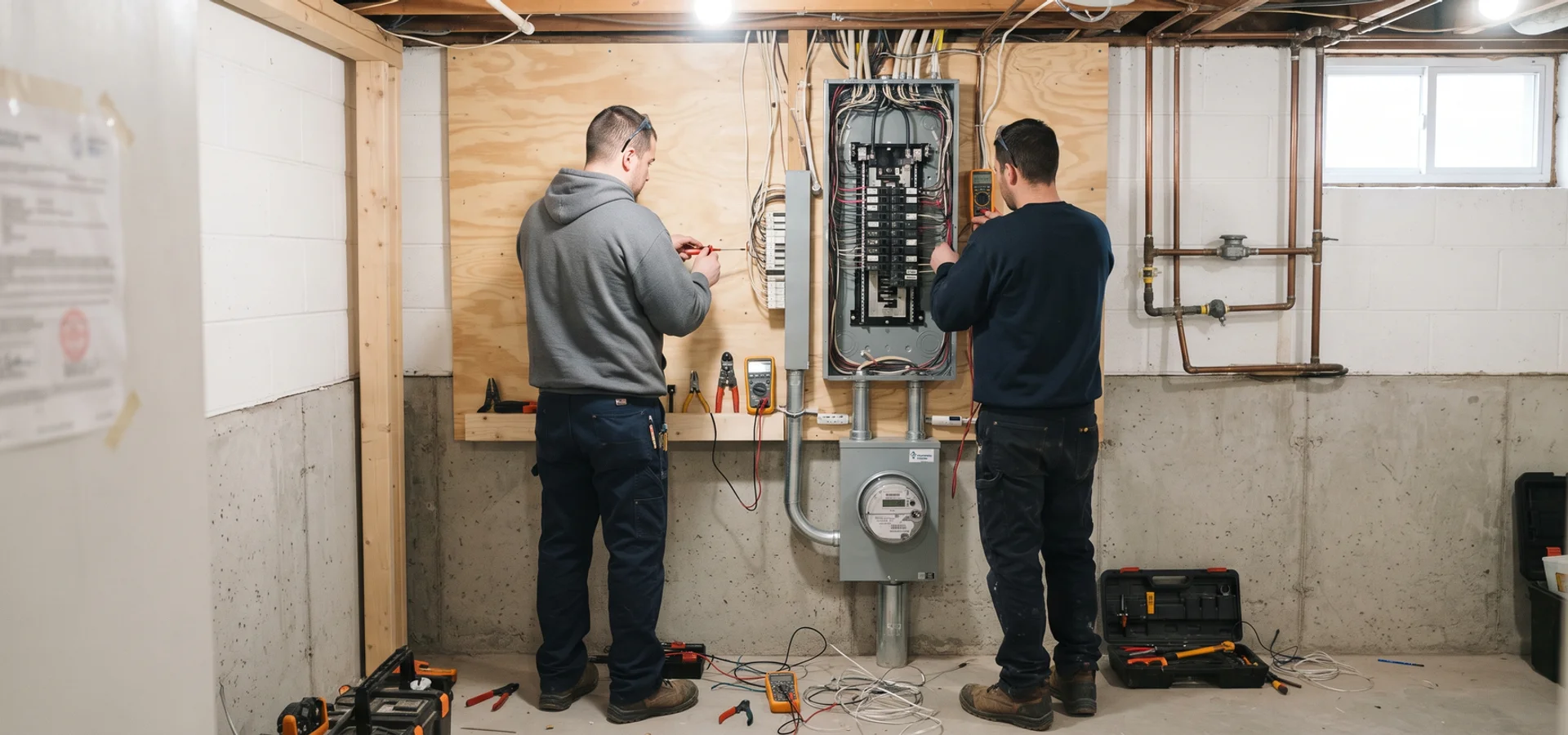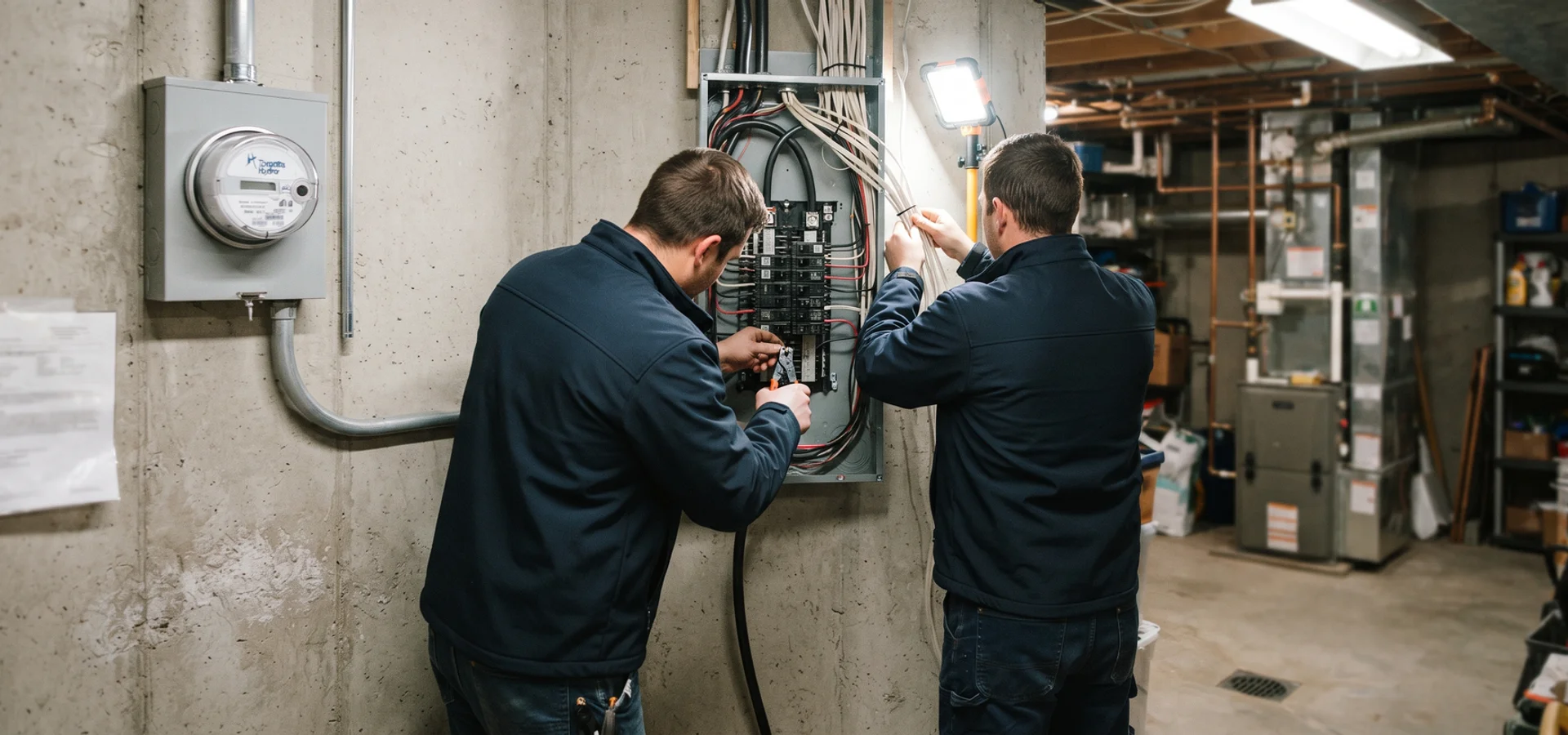
Residential Panel Work Across Toronto’s Housing Stock
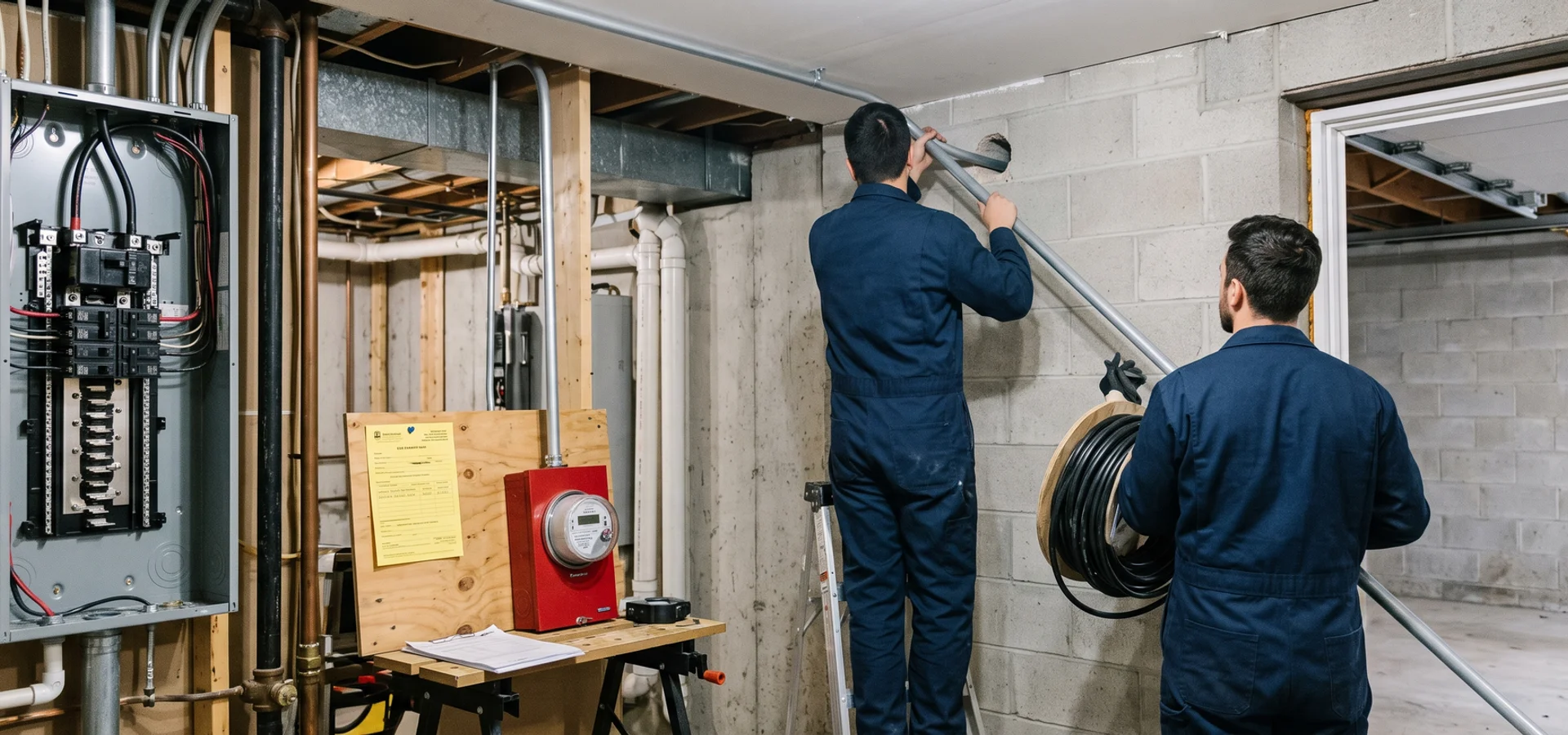
Residential panel upgrades cover Toronto’s full housing stock, from pre-1960 knob-and-tube era homes through post-war brick bungalows to modern infills and condo conversions. This page is the hub for every residential service we run, and each one has its own page with the load calculation detail, price band, process and FAQs.
Each era of Toronto housing hands us a different problem. Century homes in Cabbagetown, The Beaches, Riverdale and the Junction arrive with 60A services, Edison-base fuse blocks and overhead masts. Post-war bungalows in Scarborough, Etobicoke and North York sit on 100A services that were fine until a heat pump and an EV charger entered the plan. Homes renovated in the 1970s turn up Federal Pioneer Stab-Lok panels and aluminum branch wiring. Modern infills often have 200A already but no spare breaker positions.
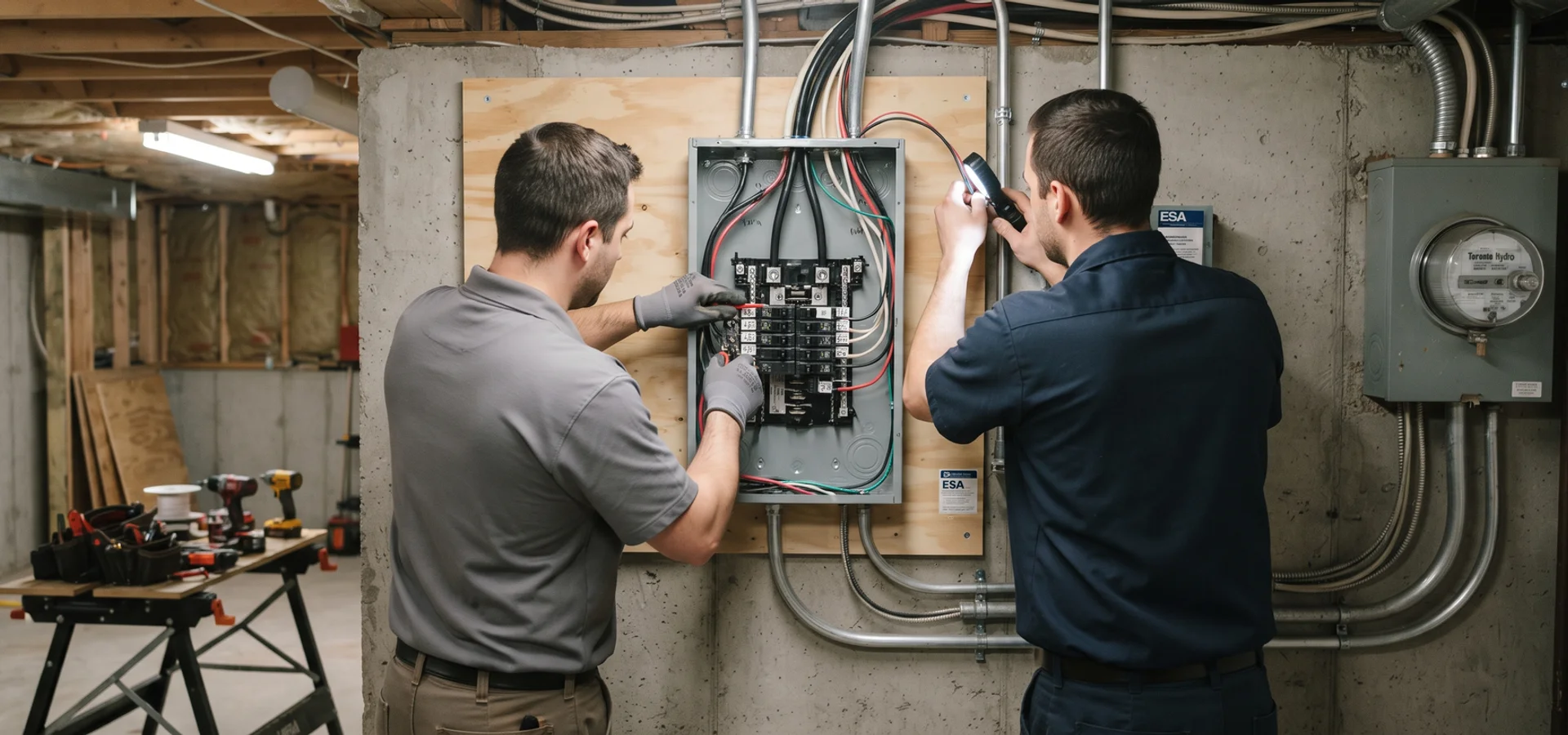
Two things are constant regardless of era. Every job is notifiable work, so an ESA permit is filed and an inspection is completed before the utility re-energizes. And the OESC Section 8 demand calculation, not a rule of thumb, decides whether you need a panel replacement, a subpanel or a full service upgrade.
The homepage carries the full cost table and the 14 questions we field most often: electrical panel upgrade in Toronto.
Service Upgrades
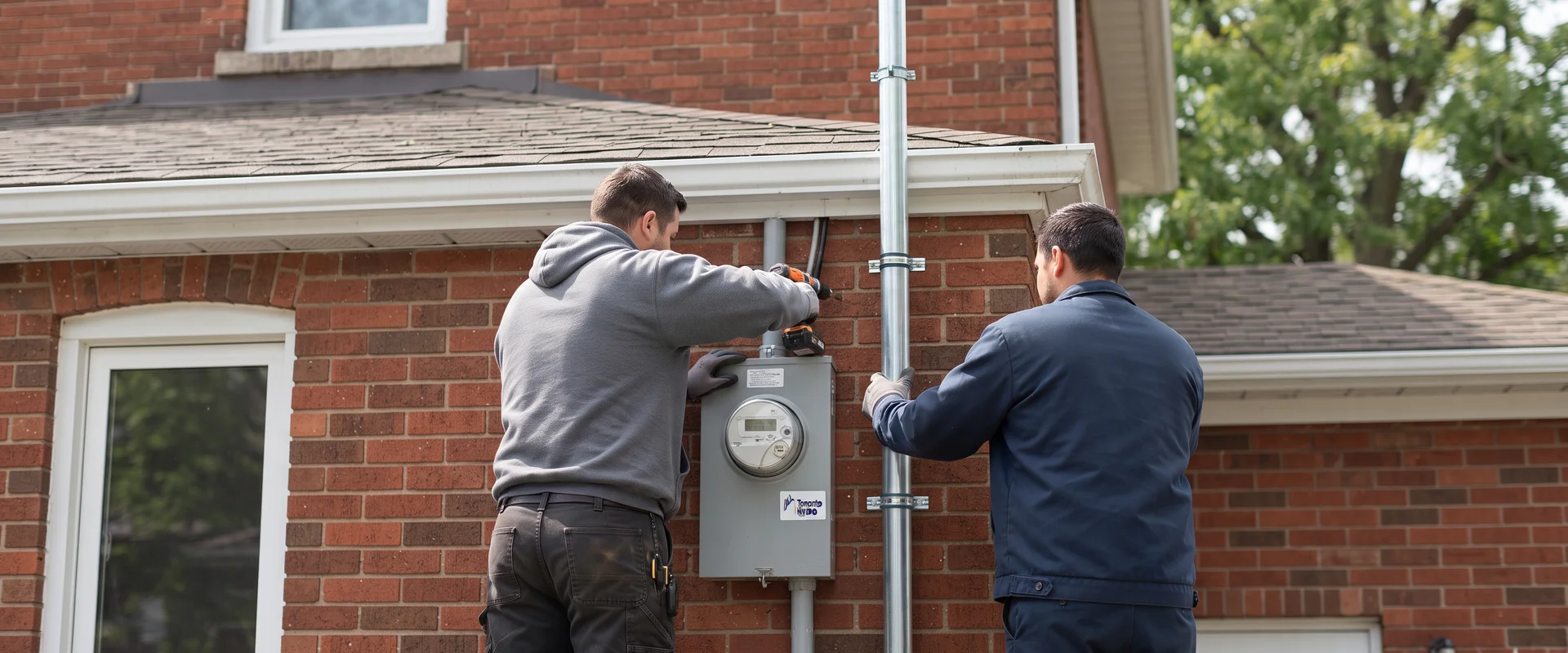
- 100A to 200A service upgrades. The most requested job. New main breaker, 42-circuit panel, meter base and service entrance, with the utility disconnect coordinated. $2,500 to $8,000 CAD.
- 60A to 100A service upgrades. Moving off a 60A service, usually with a fuse block removed at the same time. $1,500 to $4,000 CAD.
- 200A service upgrades. A straight 200A service with a 42-circuit panel, sized for full electrification. $2,500 to $8,000 CAD.
Panel Replacement and Remediation
- Electrical panel replacement. Same amperage, new load centre, for bus-bar corrosion, double-tapped terminals or an obsolete brand. $1,800 to $5,000 CAD.
- Fuse box replacement. Edison-base or cartridge fuse blocks converted to breakers with AFCI and GFCI protection. $1,800 to $5,000 CAD.
- Federal Pacific Stab-Lok panel replacement. Panels with the documented failure-to-trip defect, replaced entirely. $1,800 to $5,000 CAD.
- Aluminum wiring panel upgrade. Termination remediation at the panel and devices to satisfy underwriting. $1,500 to $8,000 CAD.
- Insurance-required electrical upgrades. Deadline-driven work with documentation built for underwriting. $1,800 to $8,000 CAD.
Dedicated Loads and Suites
- EV charger electrical upgrades. Dedicated 40A or 50A circuits, EVEMS load management, or a service upgrade. $800 to $8,000 CAD.
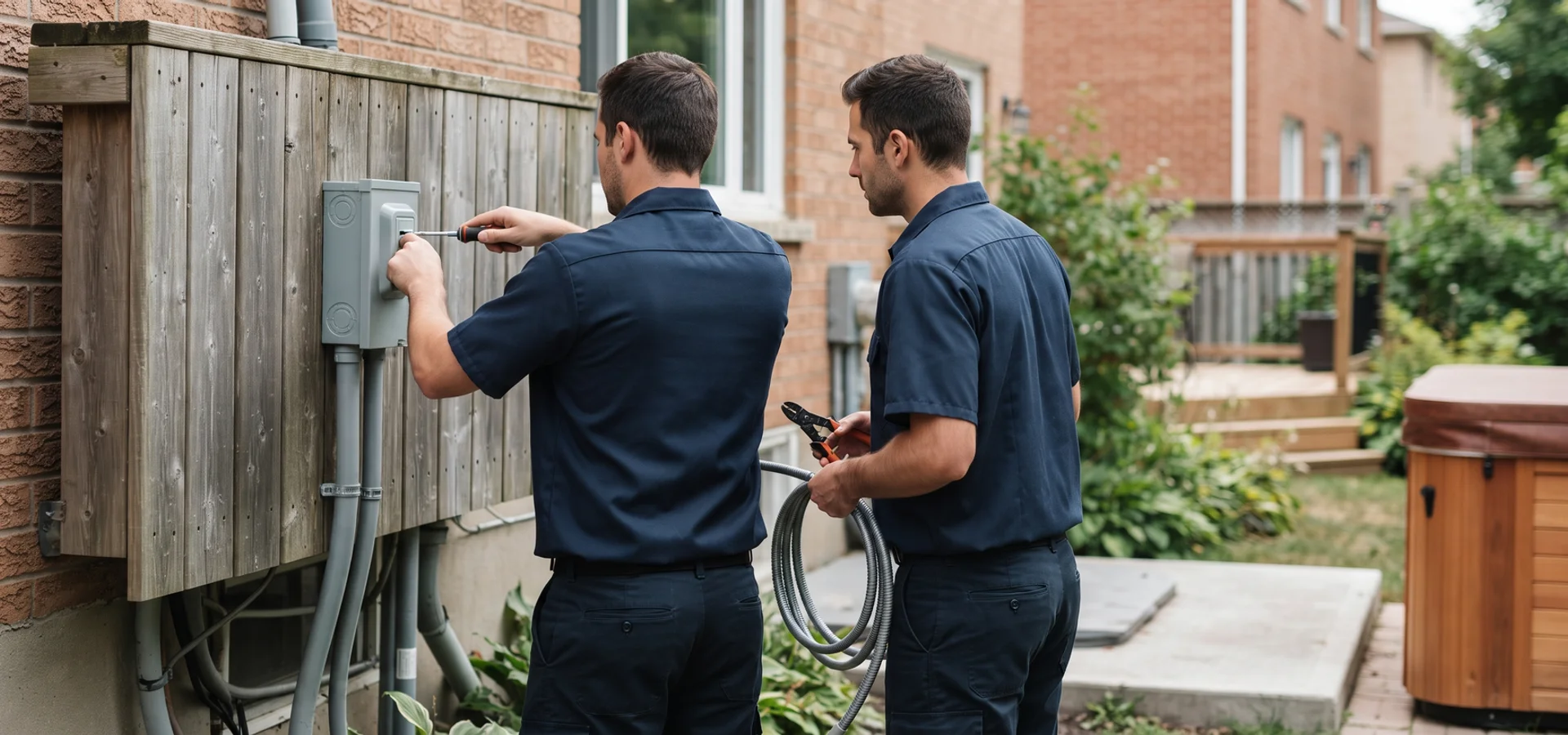
- Hot tub electrical upgrades. Dedicated 240V circuit, GFCI disconnect and bonding. $800 to $3,000 CAD.
- Basement suite electrical upgrades. Suite subpanel on a four-wire feeder with a separate disconnect and ESA sign-off. $800 to $3,000 CAD.
Which Job Do You Actually Need?
- The panel is failing but capacity is fine. Panel replacement at the same amperage.
- Capacity is the problem. A service upgrade, sized by the calculation rather than by preference.
- The panel is full but the service has headroom. A subpanel, which is far cheaper than a service change.
- An insurer or inspector named something specific. Scope to what was flagged, with the certificate as the deliverable.
- You are adding one large load. A dedicated circuit if the calculation allows, or load management if it does not.
What Every Residential Job Includes
An OESC Section 8 demand calculation at the free on-site assessment. An ESA Notification of Work filed under our contractor licence, with the permit fee included in the quote. Utility coordination with whichever distribution utility holds your service, booked by us rather than by you. A written itemised quote separating labour, materials, the permit fee and the coordination fee. And at the end, the ESA Certificate of Inspection, a panel schedule fixed inside the door, and an invoice that matches the quote.