What Is Fuse Box Replacement?
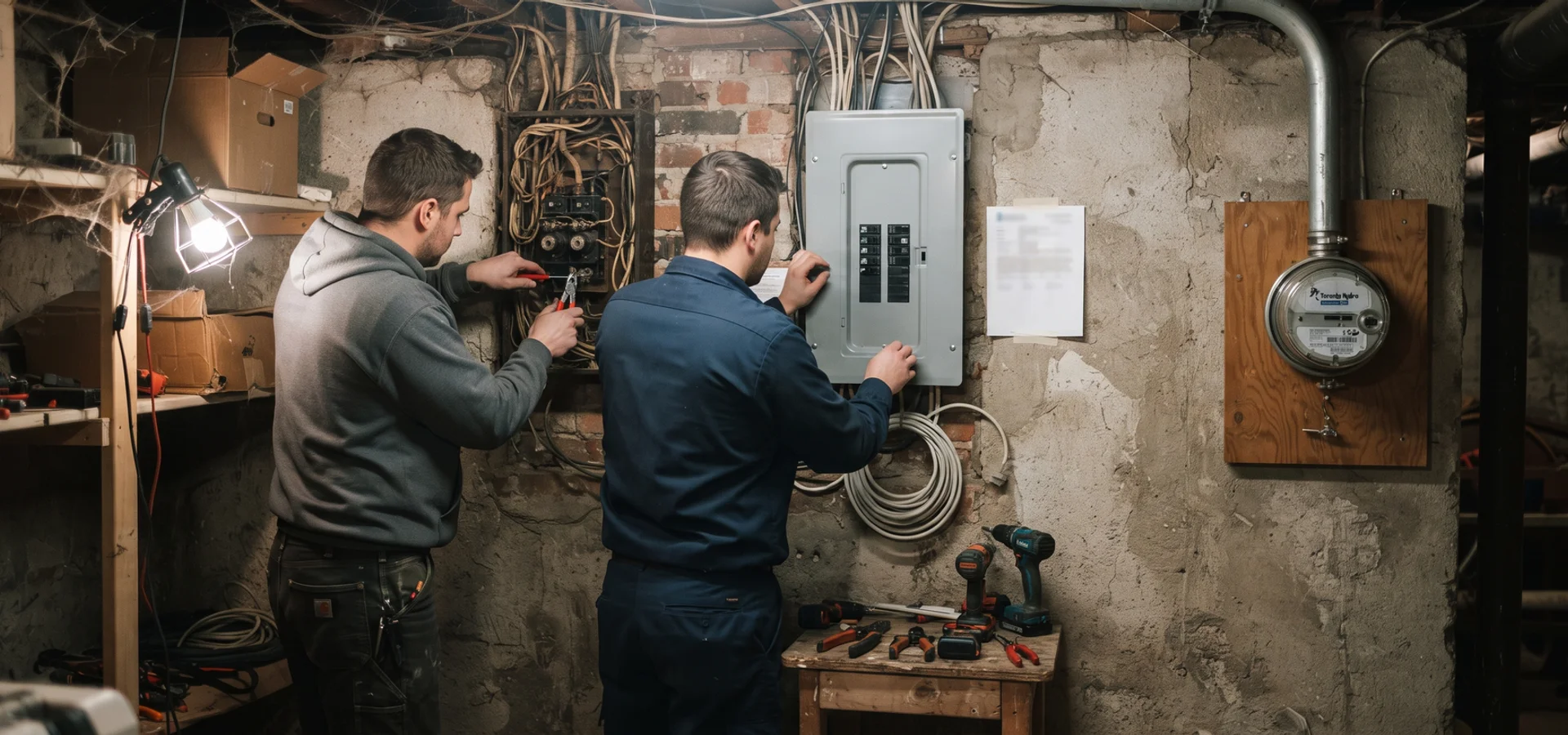
Fuse box replacement swaps an Edison-base or cartridge fuse block for a modern breaker panel with arc-fault and ground-fault protection. The old fuse block comes out entirely, a new load centre goes in, every branch circuit is transferred onto a correctly sized breaker, the neutral bar is bonded properly, and the grounding electrode conductor is verified back to the water service or ground rod.
In Toronto the call almost always arrives with a deadline attached. An insurance renewal notice, a non-renewal letter, or a home inspection report ahead of closing puts a date on it. The document that resolves all three is the same: the ESA Certificate of Inspection, which confirms an inspector reviewed the work against the Ontario Electrical Safety Code (OESC).
Most fuse panels in the city sit on a 60A service, which is the second half of the conversation. A breaker panel on a 60A service is legal and insurable, but 60A does not carry a modern household. Since the utility has to attend anyway when the service size changes, the incremental cost of going to 100A or straight to 200A at the same time is far lower than treating it as a second project later. We quote both so the decision is yours.
Typical fuse-box-to-breaker jobs finish in 1 day. For the broader range of residential work, see residential electrical panel upgrades.
Types of Fuse Installation We Replace
- Edison-base screw-in fuses. The familiar glass plug fuses. Easy to over-fuse, which is exactly why underwriters dislike them.
- Cartridge pull-out blocks. Usually the main and the range circuit. Common on 60A services in 1920s to 1950s Toronto homes.
- Split-bus fuse and breaker hybrids. A later breaker panel with a fuse-protected section still live. These get replaced as a whole, not patched.
- Sub-fused additions. A fuse block feeding a later addition or garage. The feeder is re-terminated into the new panel or converted to a proper subpanel.
When You Need a Fuse Box Replaced
- The insurer has written to you. A renewal condition or non-renewal notice naming the fuse panel. See insurance-required electrical upgrades for the documentation path.
- A home inspection flagged it before closing. Buyers’ lawyers routinely make the certificate a closing condition.
- Fuses blow repeatedly. A fuse that keeps going is telling you the circuit is loaded past its conductor rating, and replacing it with a larger fuse makes it more dangerous, not less.
- You are renovating. Any renovation that puts new circuits in front of an ESA inspector generally ends with the fuse block being replaced anyway.
- You are adding modern loads. A charger, heat pump or induction range on a 60A fuse service is not a capacity question, it is a service upgrade question. See 60A to 100A service upgrades.
- The panel is warm or smells hot. Stop using it and call. Heat at a fuse block means loose or corroded contacts carrying load.
What Drives the Cost Between $1,800 and $5,000
Service size is the main lever. A conversion at the same amperage with no utility disconnect is the cheapest version. Service entrance condition is next: a corroded meter base, an aged mast and weatherhead, or undersized conductors push the scope up. Panel position matters because the code requires working space, so a fuse block in a closet or under a stair means the new load centre relocates and the feeder is rerouted. Branch-circuit condition is the fourth: deteriorated cloth insulation or aluminum terminations at the panel need remediation before the inspector signs.
The ESA permit fee is included in the quote. Where the service size changes and the utility has to disconnect, that coordination fee appears on its own line rather than being folded into labour.
What to Expect on Conversion Day
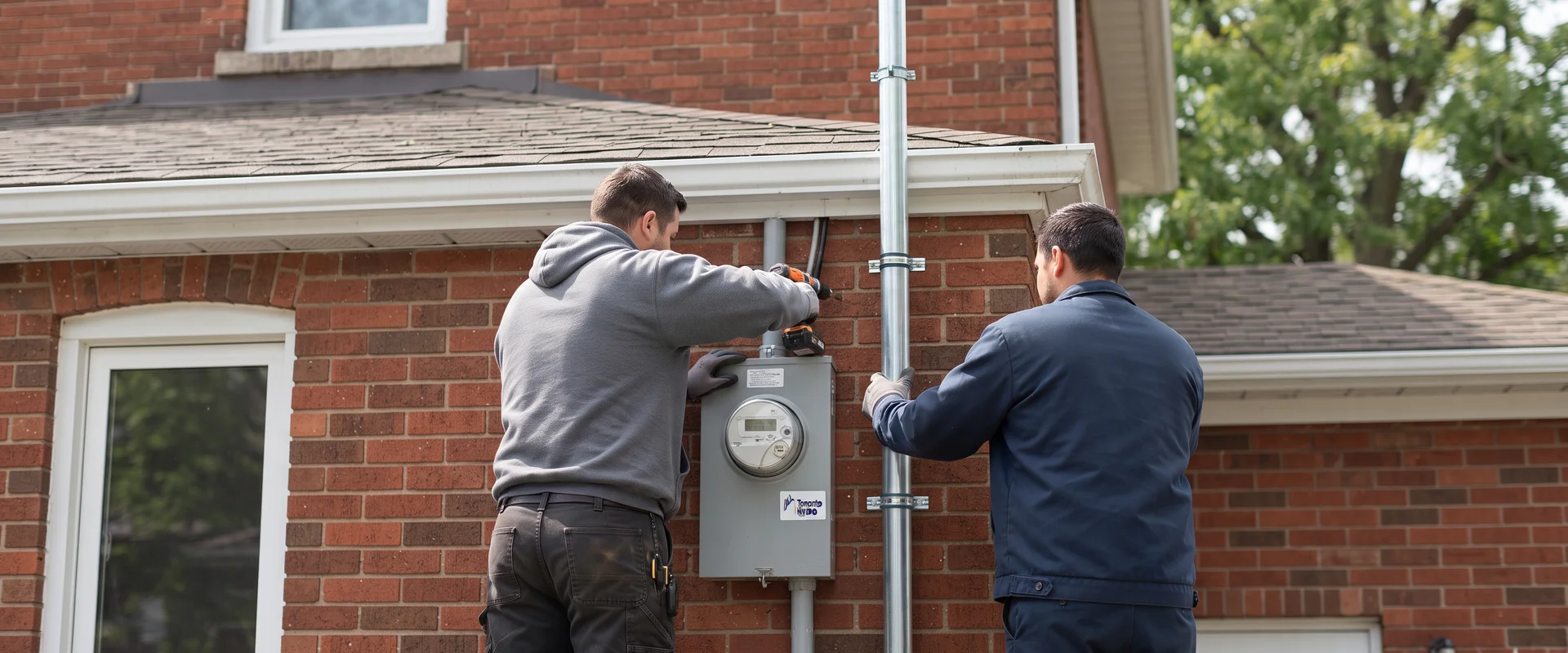
If the service size is unchanged, there is no utility visit: we isolate at the main, remove the fuse block, mount the new breaker panel, and transfer circuits. If the service is being upgraded at the same time, the utility pulls the meter first and the outage covers most of the working day.
Circuits move across onto breakers matched to the conductor size, with arc-fault and ground-fault protection fitted where the Ontario Electrical Safety Code requires it. A whole-home surge protective device goes in at this point if you have opted for one. The neutral bar is bonded, the grounding electrode conductor is verified or replaced, terminations are torqued, and the panel schedule is written and fixed inside the door.
The ESA inspector attends, and once the Certificate of Inspection is signed you have the document your insurer or lawyer is waiting for. We hand it over with the itemised invoice.