What Is an Insurance-Required Electrical Upgrade?
An insurance-required electrical upgrade is panel or service work done because an underwriter has made it a condition of issuing or renewing a policy. The letter usually names one of four things: a 60A service, a fuse panel, a Federal Pacific Stab-Lok or Federal Pioneer panel, or aluminum branch wiring. Sometimes a home inspection report ahead of a sale triggers the same requirement, with a closing date instead of a renewal date attached.
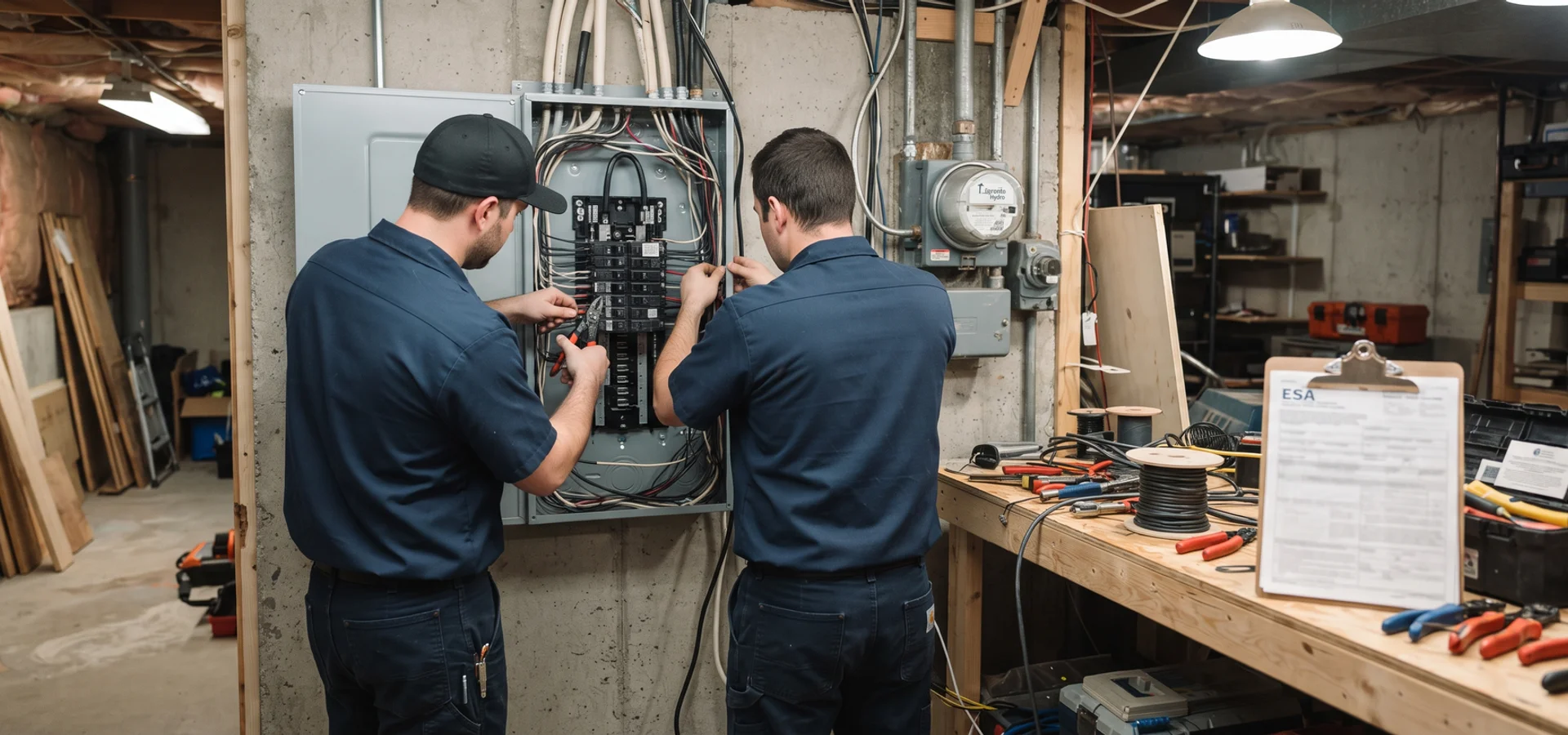
The work itself is ordinary panel work. What makes these jobs different is the deadline and the paperwork. The document that resolves the condition is the ESA Certificate of Inspection, which confirms an Electrical Safety Authority inspector reviewed the installation against the Ontario Electrical Safety Code (OESC). An invoice alone does not close an underwriting file. The certificate does.
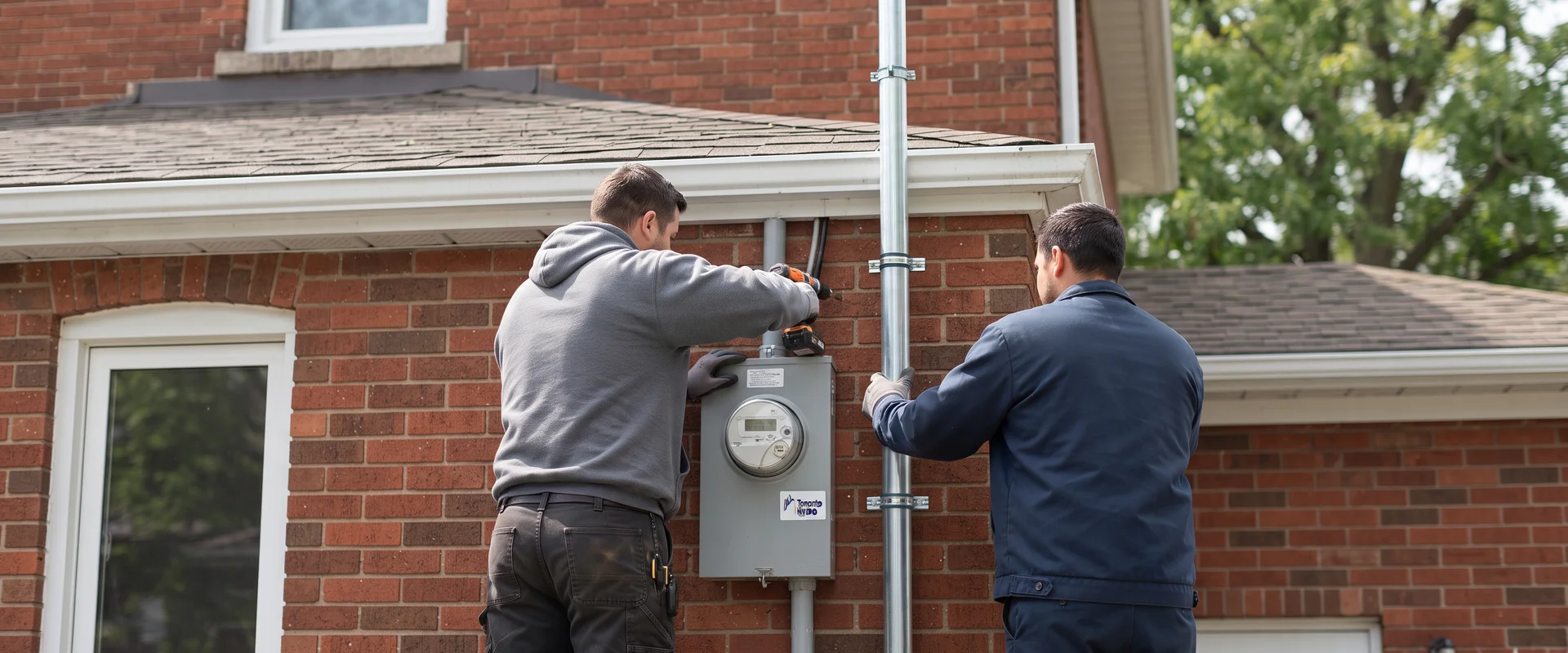
We handle the flagged item end to end: read the letter, scope only what was flagged, file the Notification of Work immediately, book the utility where a service change is involved, complete the work, pass the inspection, and hand back a documentation package you can forward without editing.
For the broader range, see residential electrical panel upgrades.
The Four Flags We See Most
- 60A service. Too small for a modern household and widely treated as uninsurable. The fix is a service upgrade, normally to 200A given the utility work is the same. See 60A to 100A service upgrades.
- Fuse panel. Edison-base or cartridge fuse blocks cannot provide arc-fault or ground-fault protection and invite over-fusing. See fuse box replacement.
- Federal Pacific Stab-Lok or Federal Pioneer. A documented failure-to-trip defect with no repair path. See Federal Pacific Stab-Lok panel replacement.
- Aluminum branch wiring. Oxidation and loosening at terminations creates heat. Normally remediated at the connections rather than replaced. See aluminum wiring panel upgrade.
When the Clock Is Already Running
- A non-renewal notice arrived. These usually carry 30 to 60 days. Tell us the date on the letter at first contact.
- A renewal came back with a condition. Often worded as “subject to replacement of the fuse panel” or similar.
- A home inspection named the panel before closing. The tightest deadlines we work to, and the ones where the inspection slot matters most.
- A new policy application was declined. Common when buying an older Toronto home. The certificate is what allows the application to be reconsidered.
- A premium came back with a surcharge. Sometimes remediation removes the surcharge rather than a coverage condition. Your broker can confirm before you spend.
What Drives the Cost Between $1,800 and $8,000
The scope drives it entirely, and the scope is set by the letter. A same-amperage panel replacement is the cheapest resolution. Aluminum termination remediation sits in the middle and varies with the number of devices involved. A service upgrade to 200A sits at the top because the meter base, service entrance conductors and a utility disconnect all enter the picture.
Where two flags overlap, and they often do on a 1950s Toronto home with a 60A fuse service, we combine them under one permit and one inspection, which costs less than running two separate projects. The ESA permit fee is included, and the utility coordination fee is itemised on its own line.
What You Get at Handoff
Three things. The ESA Certificate of Inspection, which is the document underwriting needs. A written scope description in plain language, stating what was removed, what was installed and what service size the property now has, because some underwriters want the change described as well as certified. And the itemised invoice, matching the accepted quote line for line.
Send all three to your broker or lawyer together. If underwriting comes back with a follow-up question about the installation, we answer it directly rather than leaving you to relay technical detail.