What Is a 60A to 100A Service Upgrade?
A 60A to 100A service upgrade replaces the main disconnect, the load centre, the meter base and the service entrance conductors so the property can draw 100A continuously instead of 60A. In most Toronto homes it also means the end of a fuse block, because the two almost always arrive together.
A 60A service was sized for a household with a fridge, lights and a radio. It cannot carry a dryer, a dishwasher, a microwave, air conditioning and a home office at the same time, and it certainly cannot carry a charger or a heat pump. Insurers know this, which is why a 60A service is the single most commonly flagged electrical item on Toronto policies.
The work is coordinated rather than quick. We run the OESC Section 8 demand calculation, file the ESA Notification of Work, book the utility disconnect, replace the service entrance and panel, pass the inspection, and hand over the Certificate of Inspection.
The honest conversation is usually about 100A versus 200A. For what that looks like, see 100A to 200A service upgrades, and for the wider residential range see residential electrical panel upgrades.
Where We See 60A Services
- Weston, Mount Dennis and Silverthorn. Narrow 1910s to 1940s semis, overhead masts, fuse blocks in the basement.
- East York and Danforth Village. 1920s to 1950s semis and small detached homes with cartridge-fuse mains.
- Older Oshawa and Pickering stock. Pre-war and early post-war homes where the original service was never touched.
- Duplex conversions. A 60A service split badly between two units, which needs both a service upgrade and proper subpanel separation.
When to Upgrade From 60A
- Your insurer flagged it. The most common trigger by a wide margin. See insurance-required electrical upgrades.
- Fuses blow regularly. A 60A service at its limit trips or blows under normal modern use.
- You are renovating. A kitchen or basement renovation puts new circuits in front of an ESA inspector, and 60A rarely survives the calculation.
- You are adding air conditioning. Central air on a 60A service is where many homeowners first discover the limit.
- You are selling. A 60A service narrows your buyer pool because their insurer will flag it too.
- You are adding a charger or heat pump. Skip 100A and read 200A service upgrades, because the calculation will not support these loads on 100A either.
What Drives the Cost Between $1,500 and $4,000
Service entrance scope leads: replacing the mast, weatherhead, meter base and conductors is the bulk of the labour on these jobs, and an underground lateral costs more than an overhead drop. Panel position is second, because a fuse block in a closet or under a stair means the new load centre relocates. Circuit count and protection is third, since arc-fault and ground-fault breakers cost more than standard ones and the code requires them on defined circuits. Access is the fourth on narrow city lots where there is no driveway to work from.
The ESA permit fee is included, and the utility coordination fee is itemised on its own line. If we open the service and find scope the assessment could not see, work stops and you get a revised written quote.
What to Expect on Install Day
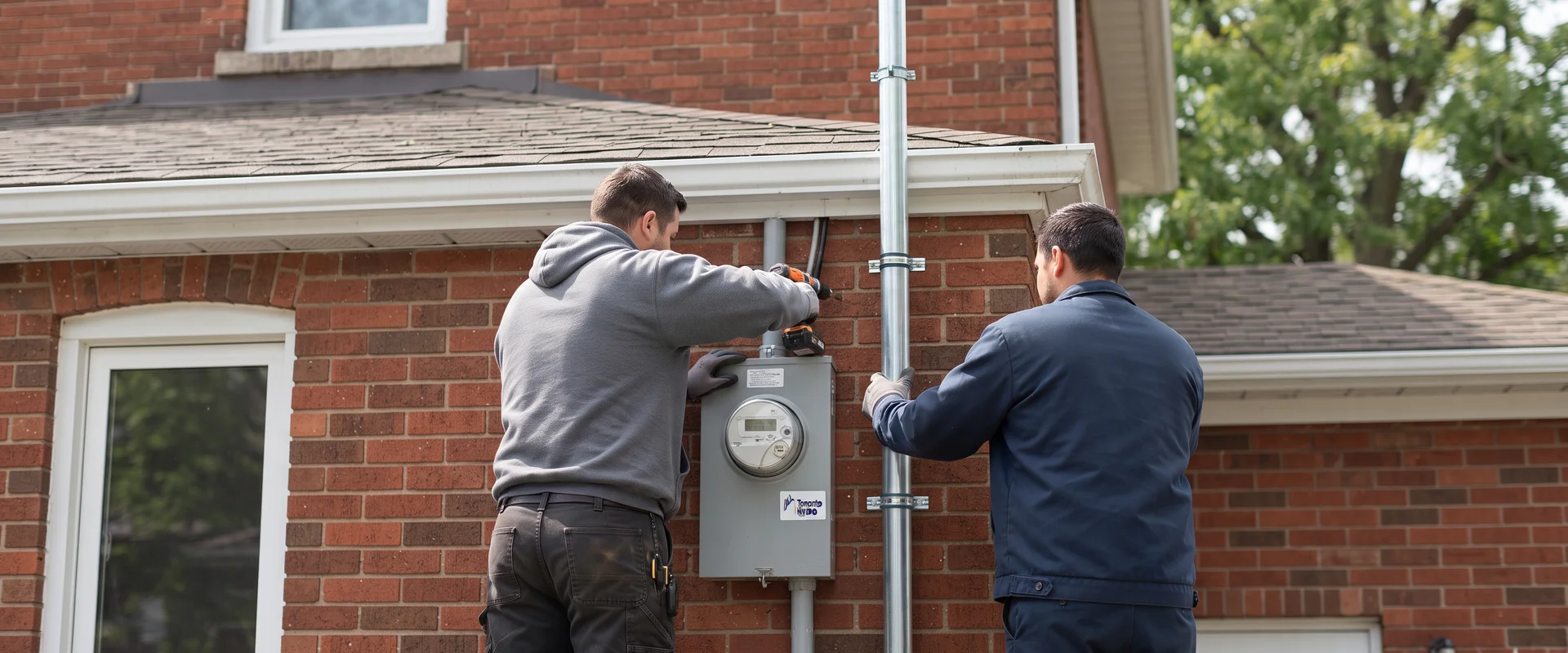
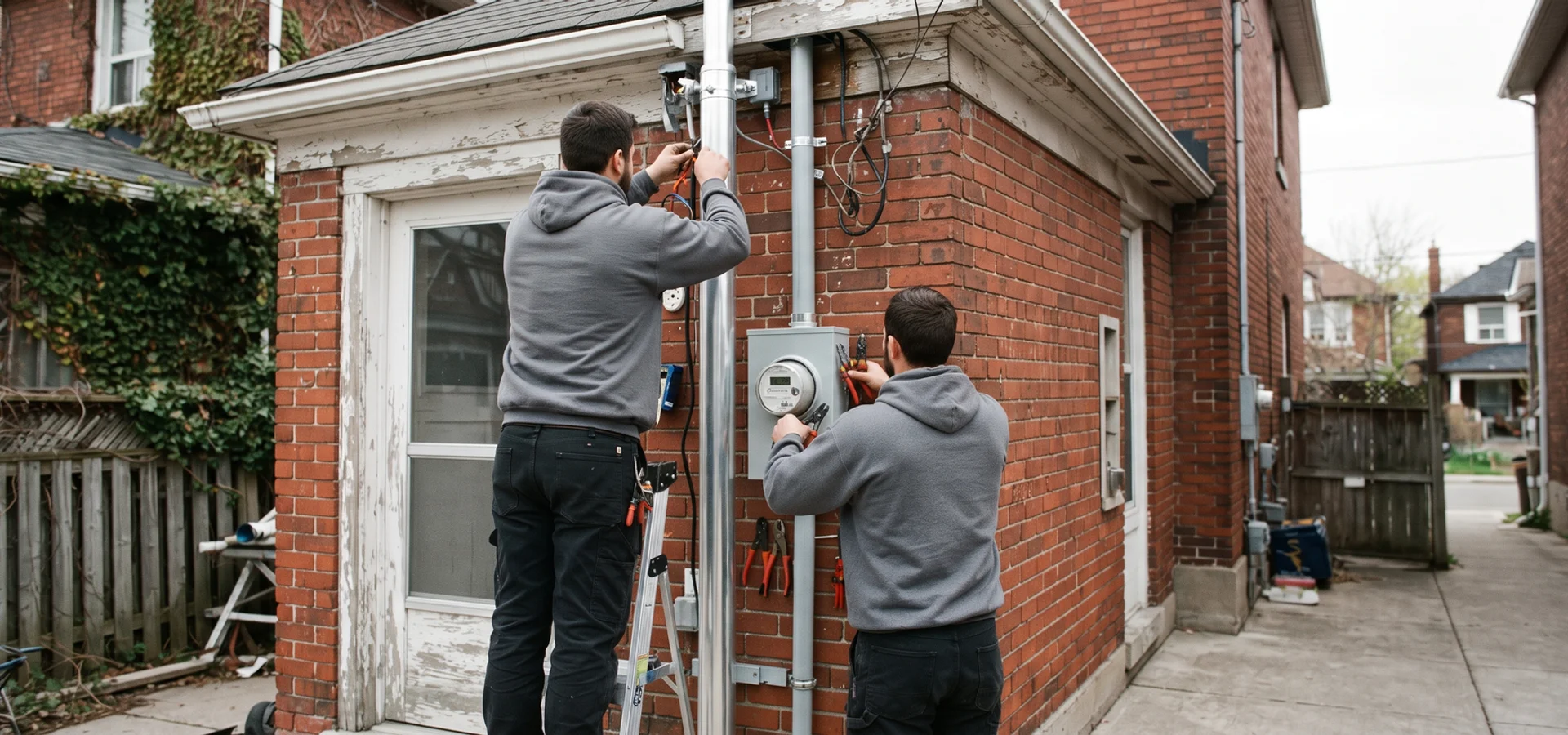
The utility pulls the meter in the morning and the property goes without power. We remove the old 60A disconnect and fuse block, replace the mast and weatherhead or the underground lateral, fit the new meter base, pull correctly sized service entrance conductors, and mount the new load centre.
Circuits transfer across onto breakers matched to their conductor size, which sometimes reveals a circuit that was over-fused for years. Arc-fault and ground-fault protection goes on where required, the neutral bar is bonded, and the grounding electrode conductor is verified back to the water service or a ground rod. Terminations are torqued and the panel schedule is written and fixed inside the door.
The ESA inspector attends, the utility reconnects and sets the meter, and power is back the same afternoon on a standard overhead job. You get the Certificate of Inspection, the panel schedule and an itemised invoice matching the quote.