What Is an Aluminum Wiring Panel Upgrade?
Aluminum branch wiring was installed in Canadian homes through the mid 1960s to late 1970s, and it is still in service across large parts of Toronto, particularly around Don Mills, Bayview Village, and 1970s subdivisions in Scarborough, North York and Brampton. The conductor itself is not the problem. The terminations are.
Aluminum expands and contracts more than copper as a circuit heats and cools, and the exposed end oxidises where it sits under a screw terminal. Over decades that combination works the connection loose, and a loose connection carrying current gets hot. That is why insurers flag it, and why remediation concentrates on connections at the panel, receptacles, switches and light fixtures rather than replacing the conductors in the walls.
Remediation means terminating the aluminum properly, to Ontario Electrical Safety Code (OESC) requirements: connectors listed for aluminum-to-copper joints, installed to the connector listing and torqued, or devices specifically rated for aluminum conductors. Where the panel is also at end of life, the remediation and a panel replacement happen together under one permit.
The deliverable at the end is the ESA Certificate of Inspection, which is what underwriting accepts. For the full documentation path, see insurance-required electrical upgrades.
Remediation Methods We Use
- Pigtailing to copper. A short copper tail joined to the aluminum with a connector listed for the purpose, so the device terminates on copper.
- Aluminum-rated devices. Receptacles and switches listed for direct aluminum termination, used where box space is tight.
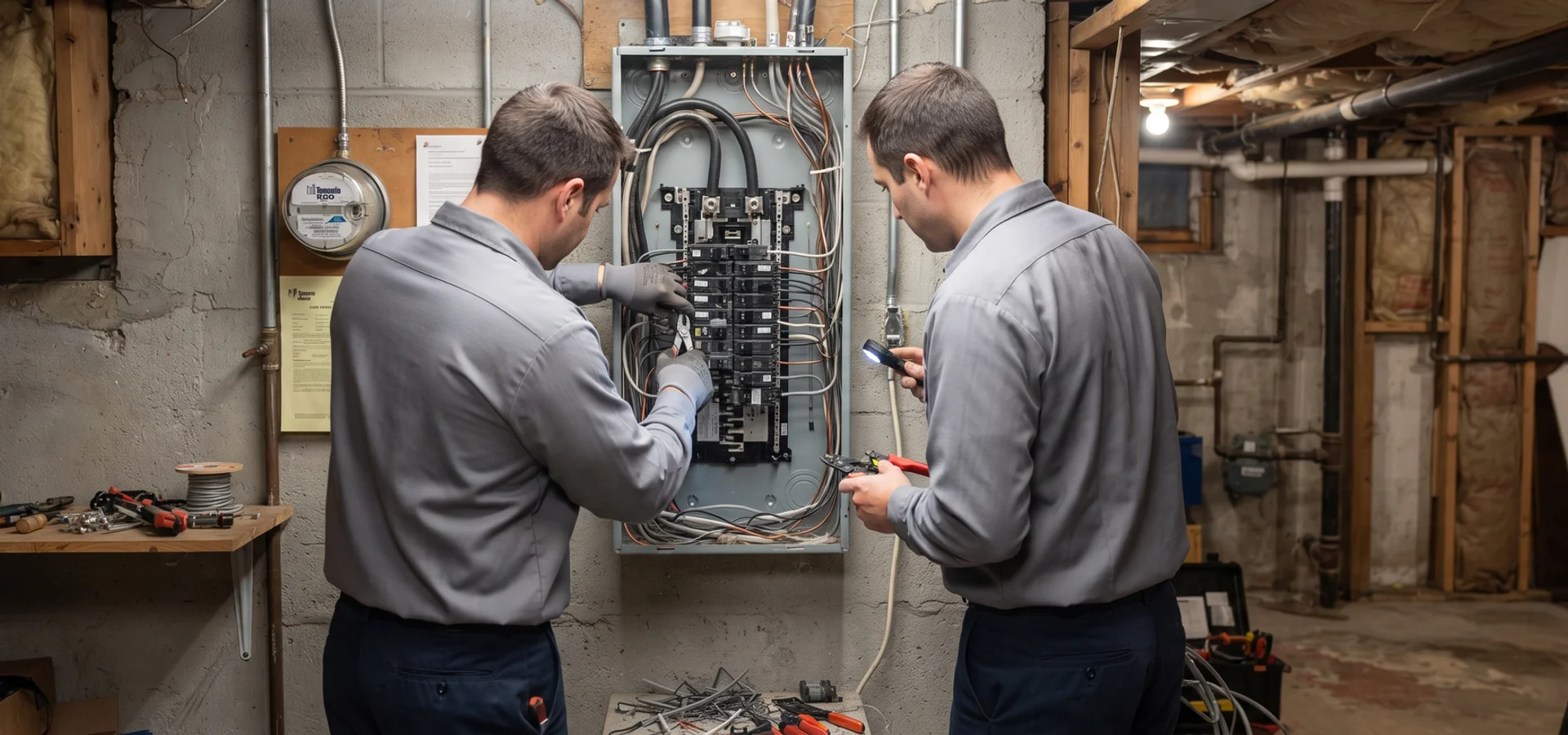
- Panel-side re-termination. Every aluminum conductor at the breaker or neutral bar cleaned, re-terminated and torqued to the panel’s listed value.
- Combined with a panel replacement. Where the load centre is corroded, obsolete or flagged, the new panel is installed and every aluminum conductor is re-terminated into it at the same time.
When Aluminum Wiring Needs Attention
- Your insurer named it. The most common trigger, usually at renewal or on a new policy application.
- A home inspection flagged it before closing. Buyers’ lawyers often want the certificate as a condition.
- A receptacle or switch plate is warm. Heat at a device is the classic failing-termination symptom. Stop using the circuit and call.
- Discolouration at the panel. Browning or a dark ring at a breaker terminal means the connection has been running hot.
- Flickering on one circuit. Intermittent contact at a loose termination shows up as flicker under load.
- You are replacing the panel anyway. Re-terminating into a new load centre is the cheapest moment to deal with the panel-side connections. See electrical panel replacement.
What Drives the Cost Between $1,500 and $8,000
Device count is the main driver once the work extends past the panel, because every receptacle, switch and fixture termination is hands-on work. Box space matters: a shallow 1970s device box with three cables in it takes longer to remediate cleanly than a deep box. Panel condition decides whether a replacement is bundled in. Insurer scope is the fourth, because some letters ask only for the panel-side terminations while others name the branch circuits throughout.
We assess terminations at the panel and a sample of devices before quoting, so the price reflects what is actually in your walls rather than an average. The ESA permit fee is included in every quote.
What to Expect During Remediation
We start at the panel: every aluminum conductor is inspected for oxidation and heat damage, cleaned, re-terminated with the correct connector or breaker, and torqued to the listed value. Any conductor with insulation damage at the termination is cut back to sound material before re-terminating.
Where device terminations are in scope, we work circuit by circuit through receptacles, switches and fixtures, pigtailing to copper or fitting aluminum-rated devices depending on the box. Circuits are re-energized and tested as we complete them, so you are not left without power through the whole job.
The ESA inspector reviews the remediation, and the Certificate of Inspection is issued on completion. You get the certificate, a written description of exactly which terminations were remediated, and the itemised invoice. That combination is what closes an underwriting file.