What Is a 600V Electrical Service Upgrade?
A 600V service upgrade moves a facility onto 347/600V three-phase distribution, with switchgear sized to the load and step-down transformers providing 120/208V for lighting, receptacles, controls and office areas. It is the standard arrangement for Toronto-area facilities running heavy motor loads or distributing power across a large building footprint, engineered and inspected to the Ontario Electrical Safety Code (OESC).
The physics is simple: at higher voltage the same power draws less current, so conductors are smaller and voltage drop across long runs is lower. For a plant with several large motors at the far end of a building, that difference is the whole argument. For a facility whose loads would sit comfortably on 120/208V three-phase, 600V adds equipment cost and operational complexity for nothing, and we will say so.
The dominant variable on these projects is the utility. A 600V service typically needs a vault or pad-mount transformer, primary routing, and a metering arrangement, all specified and priced by the utility with lead times measured in weeks to months. That coordination starts before anything is specified, because it sets the schedule and often the budget.
For the industrial range, see industrial electrical panel upgrades.
Configuration Options
- 600V distribution extension. The service is already 600V and the work is adding switchgear sections and feeders.
- 600V switchgear with step-down transformer. New switchgear plus the transformer and secondary distribution for 120/208V loads.
- New 600V service with vault coordination. Full service conversion including the utility vault or pad-mount arrangement.
- 600V with motor control centres. Distribution plus MCCs and starters for the machinery.
When 600V Is the Right Answer
- Heavy motor loads. Large compressors, pumps, chillers and process machinery specified at 600V.
- Long distribution runs. A large building footprint where voltage drop at lower voltage would force oversized conductors.
- Existing equipment is 600V. Machinery purchased for a 600V facility cannot simply run on 208V.
- Capacity is exhausted at 208V. Where feeder sizes are already at practical limits, higher voltage is the way to add capacity.
- A production expansion is planned. Sizing once for the expanded plant costs less than two upgrades. See manufacturing facility electrical upgrades.
What Drives the Cost Between $5,000 and $15,000
Within the contractor scope, switchgear size and section count leads, followed by step-down transformer capacity and the extent of secondary 120/208V distribution. Feeder routing and run lengths through the building are third. Cutover constraints are fourth, because phased transfers into shutdown windows take longer than a single changeover.
Outside the contractor scope sits the utility’s vault, transformer and primary work, priced by the utility. On a new 600V service that is frequently the largest line in the total project cost, and it is not something a contractor can discount or accelerate. We put it in front of you at the start.
What to Expect Through the Project
The early work is the load study, the utility service application and vault coordination, and the commercial ESA plan review submission covering the single-line diagram, equipment ratings, step-down transformer detail and short-circuit current rating verification. These run in parallel, and they set the schedule.
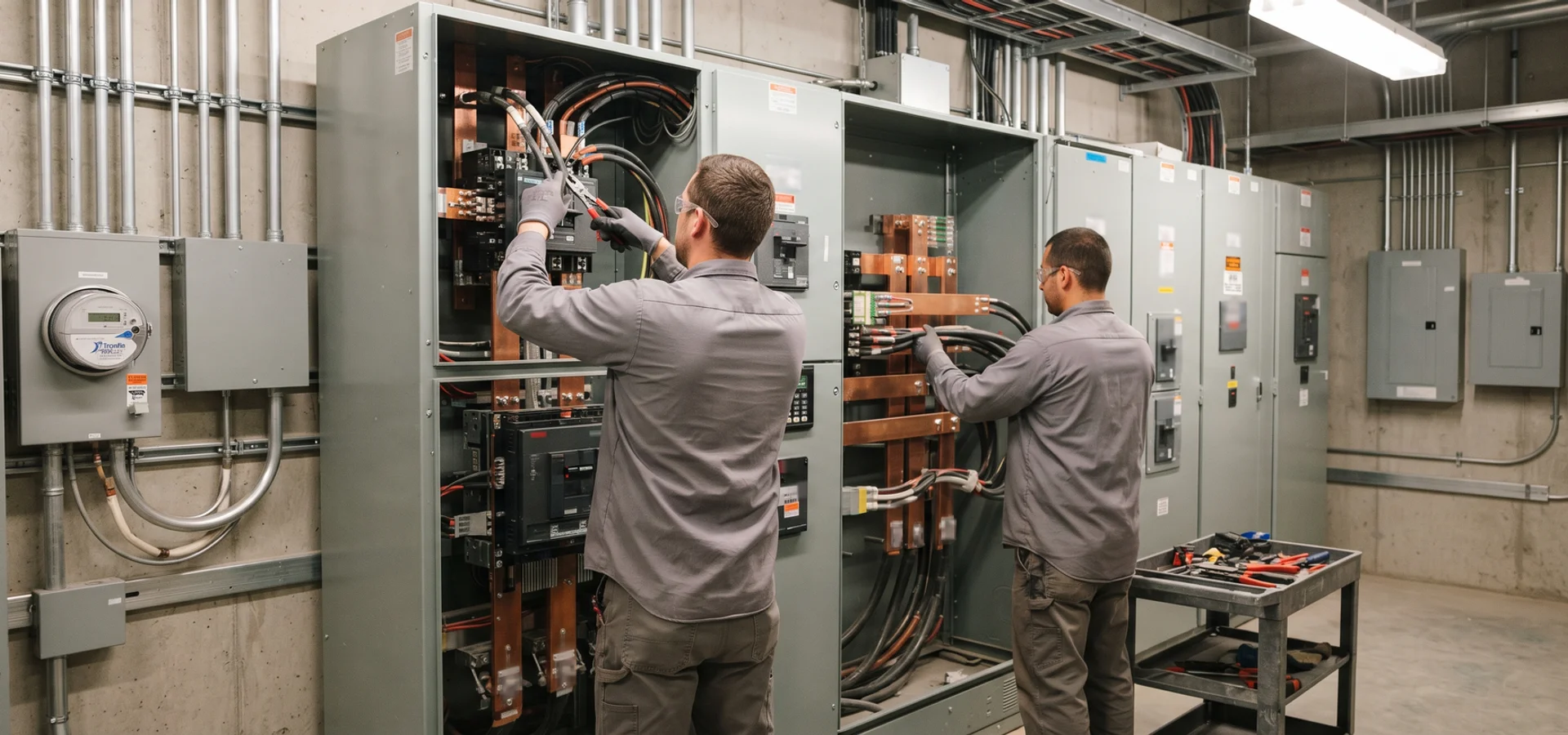
On site, switchgear is set and the step-down transformers installed, with feeders run to distribution and motor control. Terminations are torqued to specification and cable management is dressed properly, because a 600V room is a place where future maintenance access matters. Voltage and phase rotation are verified and documented before any motor is energized.
Feeders transfer in the agreed shutdown windows. The ESA inspector attends, the utility energizes, and you receive the final single-line diagram, switchgear and distribution schedules, transformer and SCCR data, verification records, the Certificate of Inspection and the itemised invoice for the plant file.