What Is a Federal Pacific Stab-Lok Panel?
Federal Pacific Electric Stab-Lok panels, sold across Canada under the Federal Pioneer name, were installed through the 1960s, 1970s and into the 1980s. The breakers have a documented failure-to-trip defect: under an overload or short circuit, the breaker can fail to open while still appearing to be switched on. When a breaker does not trip, the conductor and the insulation around it absorb the fault current instead, which is how a nuisance overload becomes a fire.
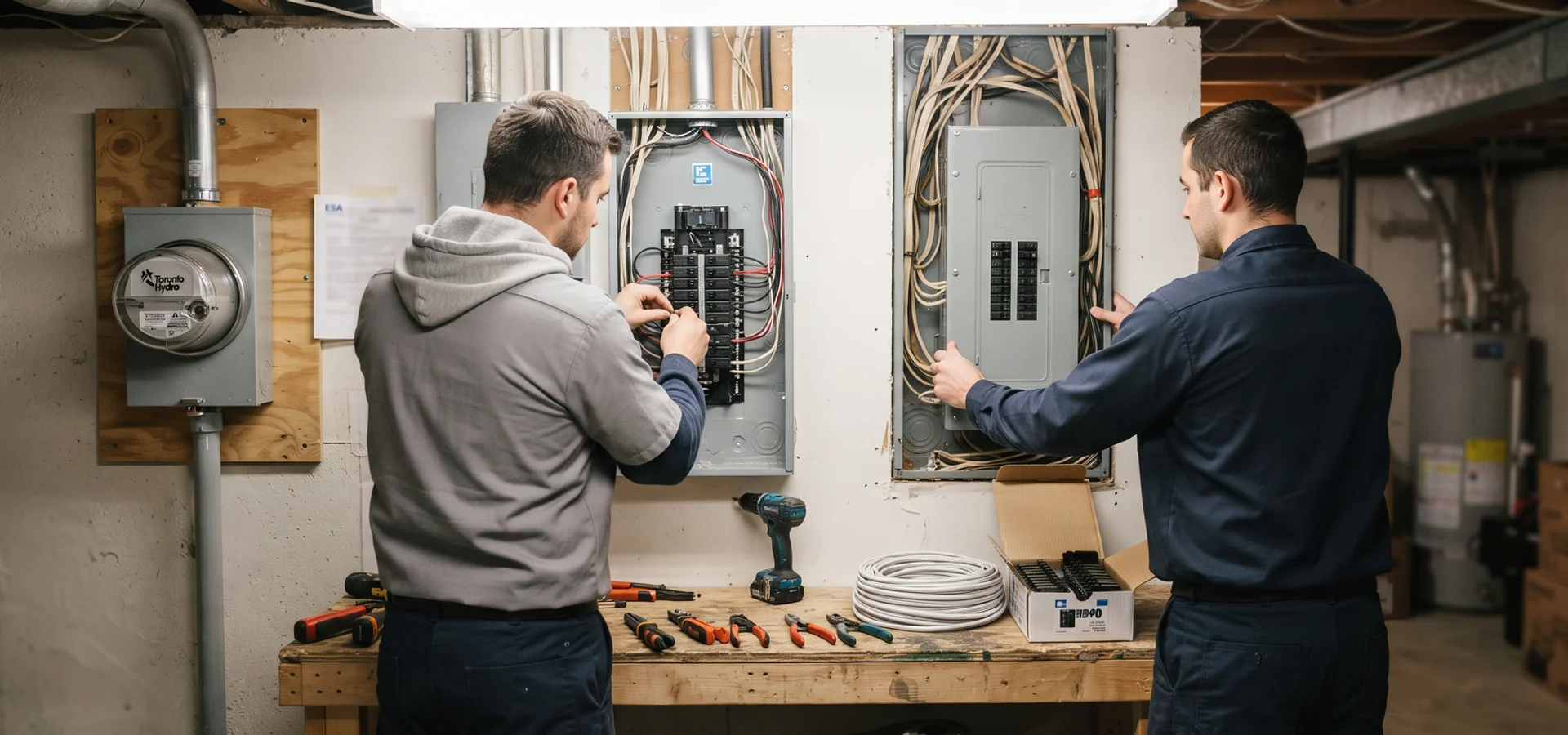
There is no repair path. You cannot retrofit a Stab-Lok panel, and you cannot fix it by swapping in breakers from another manufacturer, because a breaker not listed for that enclosure is its own code violation. Once the panel is identified, the enclosure and every breaker in it get replaced with a load centre that meets the Ontario Electrical Safety Code (OESC).
In Toronto and across the GTA these panels turn up most often in Kingsway and Islington renovations, 1970s North York and Scarborough two-storeys, and Etobicoke homes updated once and never touched since. They almost always surface the same two ways: a home inspection report before a sale, or an insurance renewal review.
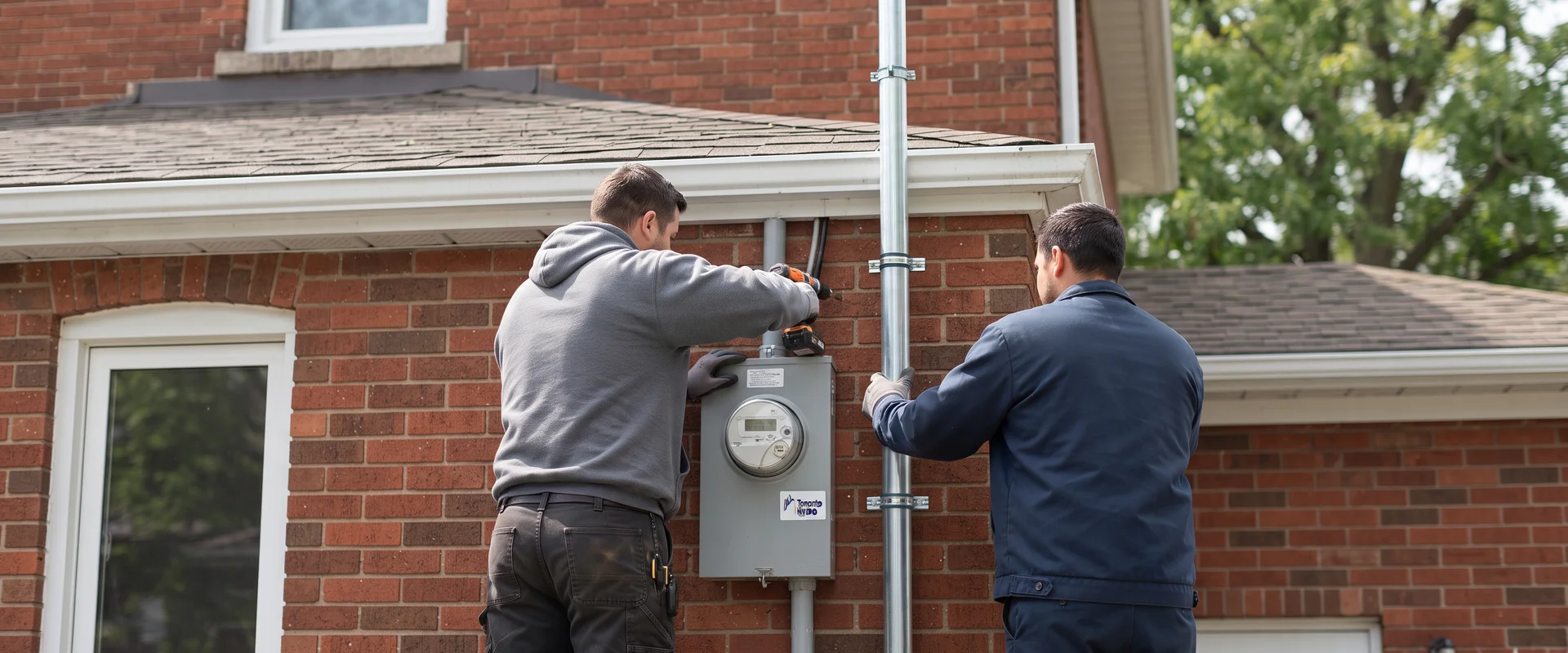
The fix is a panel replacement with an ESA permit and a Certificate of Inspection at the end. For the wider residential range, see residential electrical panel upgrades.
How We Identify One
- The label. Inside the door, look for Federal Pacific Electric, FPE, or Federal Pioneer. This is the definitive check.
- The breaker toggles. Stab-Lok breakers typically carry a thin red or orange strip across the toggle, visible when the breaker is on.
- The bus arrangement. The stab-on connection style is distinctive to anyone who works panels every week.
- Age alone is not evidence. Plenty of 1970s Toronto panels are other brands with no defect history, which is why we confirm from the label before quoting rather than selling a replacement on suspicion.
When Replacement Becomes Urgent
- A home inspection named it before closing. Buyers’ lawyers routinely make the ESA certificate a condition of closing.
- Your insurer flagged it at renewal. Many underwriters decline or surcharge while one is in service.
- A breaker has already failed to trip. If a circuit has faulted and the breaker stayed on, stop using the circuit and call.
- You are adding load. Any new circuit put in front of an ESA inspector on a Stab-Lok panel ends in replacement anyway, so combine it with the upgrade you were planning.
- The panel is full or warm. Tandems in every slot, or heat at the bus, means the panel needed replacing regardless of the brand. That path is covered under electrical panel replacement.
What Drives the Cost Between $1,800 and $5,000
Service size decides most of it. Keeping the existing amperage avoids a utility disconnect entirely, which is the cheapest version of this job. Combining with a service upgrade shifts the project into the 100A to 200A upgrade band, but as one project rather than two it usually saves money overall if a 200A service is on your horizon.
Service entrance condition is next: a corroded meter base or aged mast gets replaced at the same time. Panel position matters for working-space clearance, and circuit count decides the size of the new load centre. The ESA permit fee is included, and where a utility disconnect is needed the coordination fee sits on its own line.
What to Expect on Replacement Day
We photograph the existing panel and label for your file, then isolate and remove the Stab-Lok enclosure and all its breakers. The new load centre is mounted, and each branch circuit is transferred onto a correctly sized breaker with arc-fault or ground-fault protection where the Ontario Electrical Safety Code requires it. The neutral bar is bonded, the grounding electrode conductor is verified back to the water service or ground rod, terminations are torqued to specification, and the panel schedule is written and fixed inside the door.
The ESA inspector attends the same day where the schedule allows. Once the Certificate of Inspection is signed, you have the document your lawyer, buyer or insurer is waiting for, and we hand it over with the itemised invoice.